Selling a House in Saratoga CA: Late-Summer Staging
How to stage indoor-outdoor flow, generous rooms, and daily life before the critical launch window.

Selling a House in Saratoga CA: Late-Summer Staging
How to stage indoor-outdoor flow, generous rooms, and daily life before the critical launch window.
Late-summer buyers judge the whole property at once
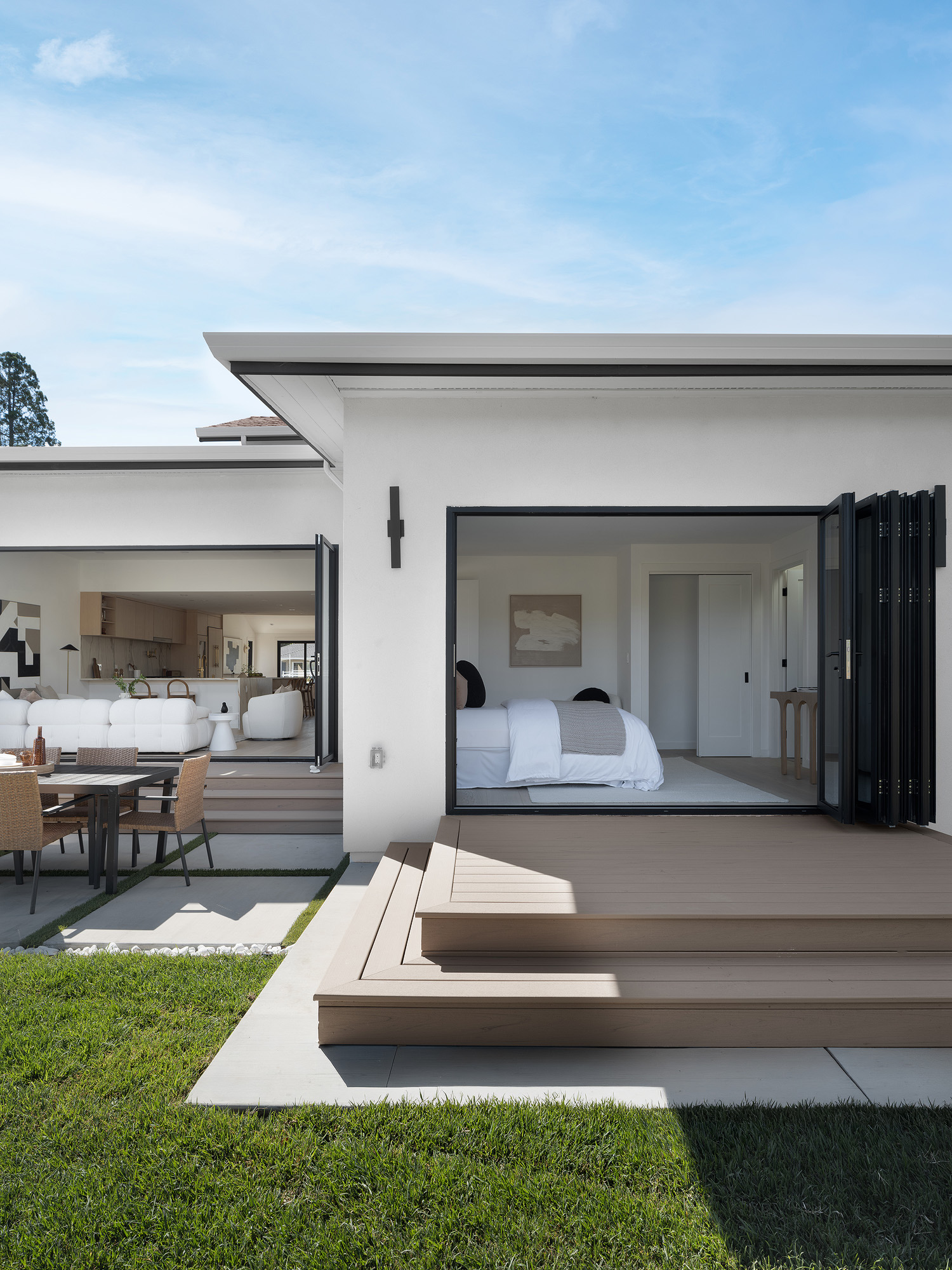
By late summer, a Saratoga showing often begins before a buyer reaches the front door. Dry grass along the curb, dusty leaves near the gate, or faded patio cushions can register within seconds. Inside, buyers notice whether the afternoon light reaches the living room, whether the doors open easily to the terrace, and whether the house feels connected to its grounds.
That is the practical context for selling a house in Saratoga CA in 2026. Buyers at this price level are not evaluating rooms as isolated boxes. They are assessing a lifestyle: breakfast near the garden, focused work behind a closed door, dinner outside after the heat drops, and enough visual calm for the architecture to carry the listing.
The June numbers show why preparation matters. According to MLSListings, Saratoga single-family homes posted a $4.83 million median sale price, 28 closed sales, 33 active listings, and 1.4 months of inventory. The median market time was 13 days, while the average was 33 days. Homes achieved a 101% sale-to-list ratio.
That gap between median and average market time describes a two-speed market. Some homes attract attention quickly; others sit long enough for buyers to question condition, pricing, or both. My view is straightforward: late-summer staging should not add more luxury signals. It should make the property easier to understand.
Late-summer staging should not add more luxury signals. It should make the property easier to understand.
Limited inventory does not remove buyer selectivity
Saratoga’s supply remains tight, but scarcity alone does not make dated finishes disappear. A buyer still feels the cool edge of an older tile counter, sees yellowed recessed lighting against fresh daylight, and calculates the effort required to update the room. At a luxury price point, those small observations accumulate.
The broader market reinforces that tension. The California Association of Realtors reported 1.7 months of inventory and an 11-day median market time for Santa Clara County in June. Yet the county’s $1.95 million single-family median was down 7.6% year over year. Saratoga’s 1.6% annual increase therefore stood apart from wider county softness.
Meanwhile, Realtor.com’s June data for the San Jose metro showed active listings up 6%, a 37-day median time on market, and price reductions on 16.5% of listings. Those figures do not describe Saratoga alone, but they do show a nearby buyer pool willing to pause, compare, and negotiate.
The Saratoga real estate market in 2026 rewards readiness more than optimism. Stage to support a price grounded in current neighborhood comparables. Do not use furniture, art, or fresh flowers as a substitute for correcting visible maintenance issues or an ambitious asking price.
Make indoor-outdoor living visible from the first room
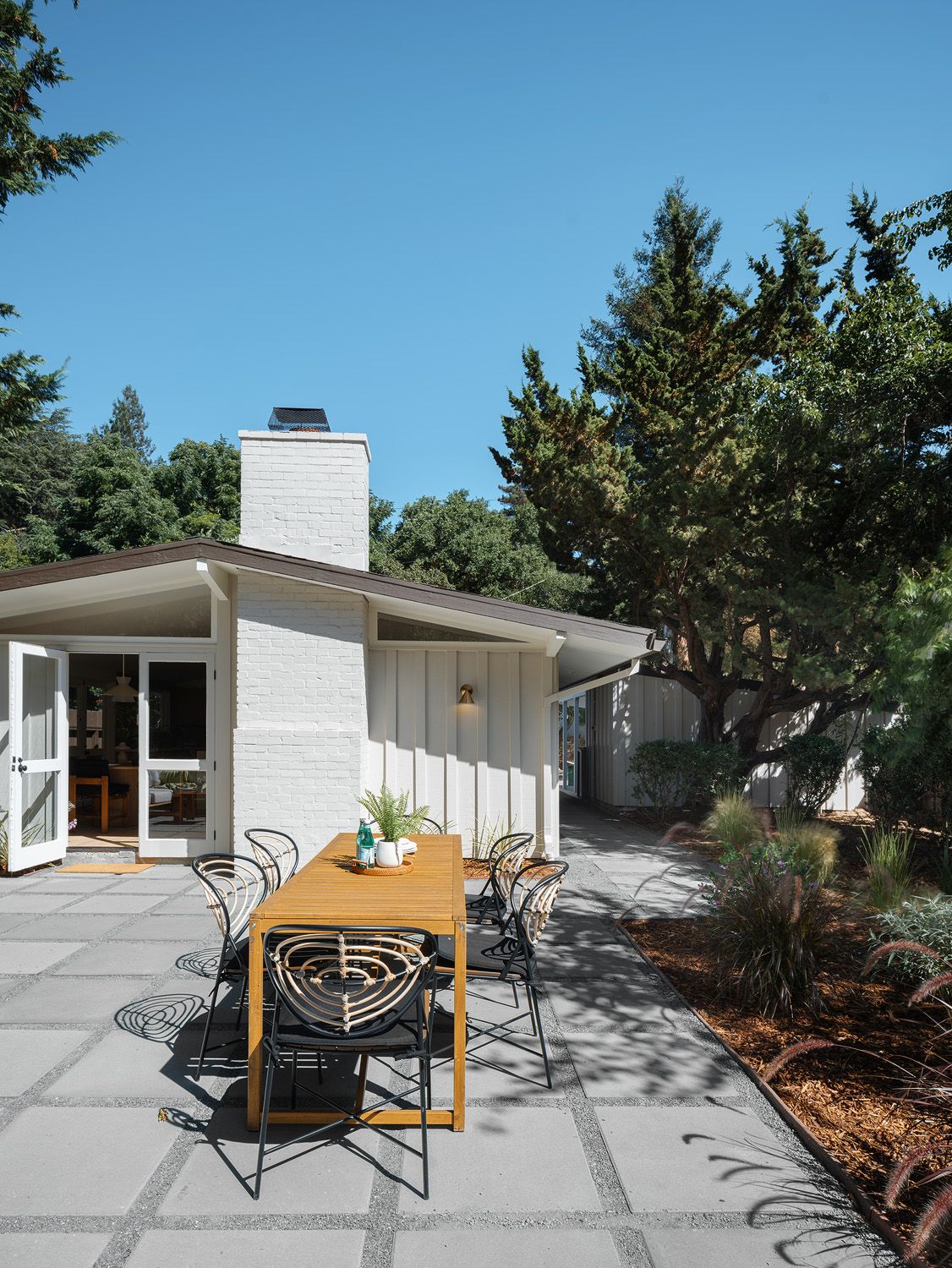
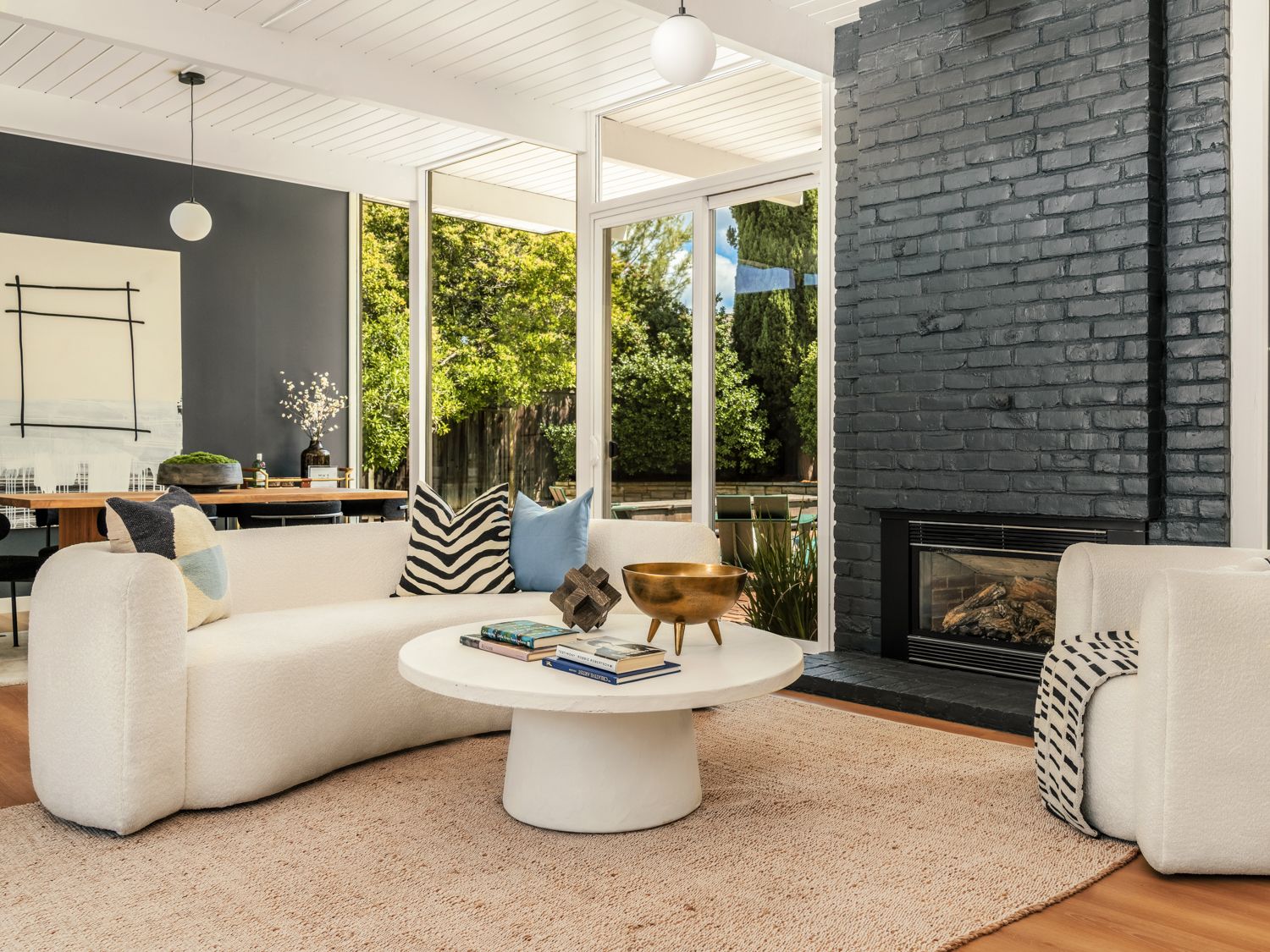
Indoor-outdoor living is not established by placing two chairs on a patio. Buyers need to see a clear sequence from the interior seating area to the threshold, outdoor dining zone, garden, pool, or view. If a bulky sectional blocks the glass doors, or if the terrace feels detached from the living room, the property loses usable scale.
Start with the sightline. From the main entry or living-room doorway, preserve a clean view toward the exterior. Keep furniture backs low, pull heavy pieces away from door tracks, and use a rug large enough to organize the seating without creating a visual barricade. Sheer linen panels can soften hard sunlight, but they should not hide mature trees or a long garden axis.
Next, give the exterior a specific function. A dining table should have enough clearance to read as usable, with chairs aligned rather than scattered. A secondary seating area can face a fireplace, pool, or planted edge. Use restrained materials that relate to the interior, such as warm wood, woven fiber, pale stone, and matte metal, so the transition feels deliberate.
Late-summer maintenance matters just as much as furniture. Clean the glass, remove brittle planting, wash dusty paving, trim vegetation away from doors, and replace sun-bleached textiles. If a fountain or pool equipment adds a persistent mechanical hum, address it before showings. Buyers should hear leaves and water, not deferred upkeep.
At night, use consistent warm light across both zones. Pools of amber light at the terrace, kitchen, and living room help buyers understand that the outdoor space remains part of the house after sunset.
Use furniture to prove scale, not fill square footage
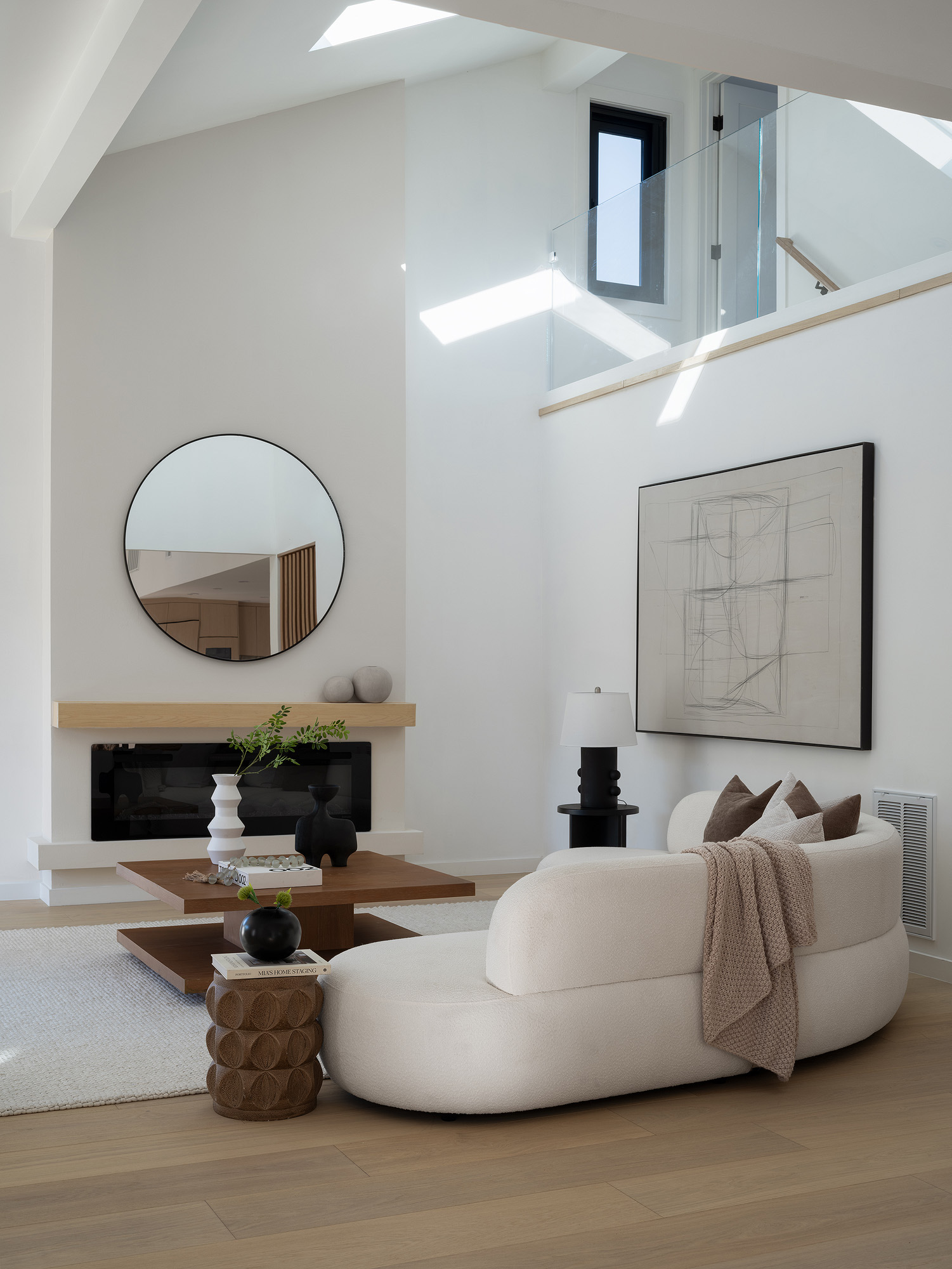
Large Saratoga homes can still photograph smaller than they feel. High ceilings, long walls, and open circulation routes need furniture with enough presence to hold the room. A small sofa floating on a thin rug makes a broad living area look unfinished rather than spacious.
Scale starts underfoot. In a large room, the rug should connect the primary seating pieces instead of sitting like an island beneath the coffee table. Then establish a clear hierarchy: one substantial sofa, appropriately weighted chairs, a coffee table that relates to the seating span, and fewer accessories. A heavy wool texture or quiet woven pattern can add depth without competing with the architecture.
The opposite problem appears when owners leave too much furniture in place. Multiple cabinets, family-size recliners, exercise equipment, and narrow side tables can turn generous circulation into a slalom course. Physical staging, meaning the installation of selected rented furniture and accessories, should edit these competing shapes and reveal how people move through the room.
Use empty space with purpose. A visible stretch of wood floor between the dining and living zones can communicate breathing room. A blank wall near a window may help sunlight spread across the room. Luxury scale comes from proportion and control, not the number of objects.
Luxury scale comes from proportion and control, not the number of objects.
Prioritize the spaces that answer lifestyle questions
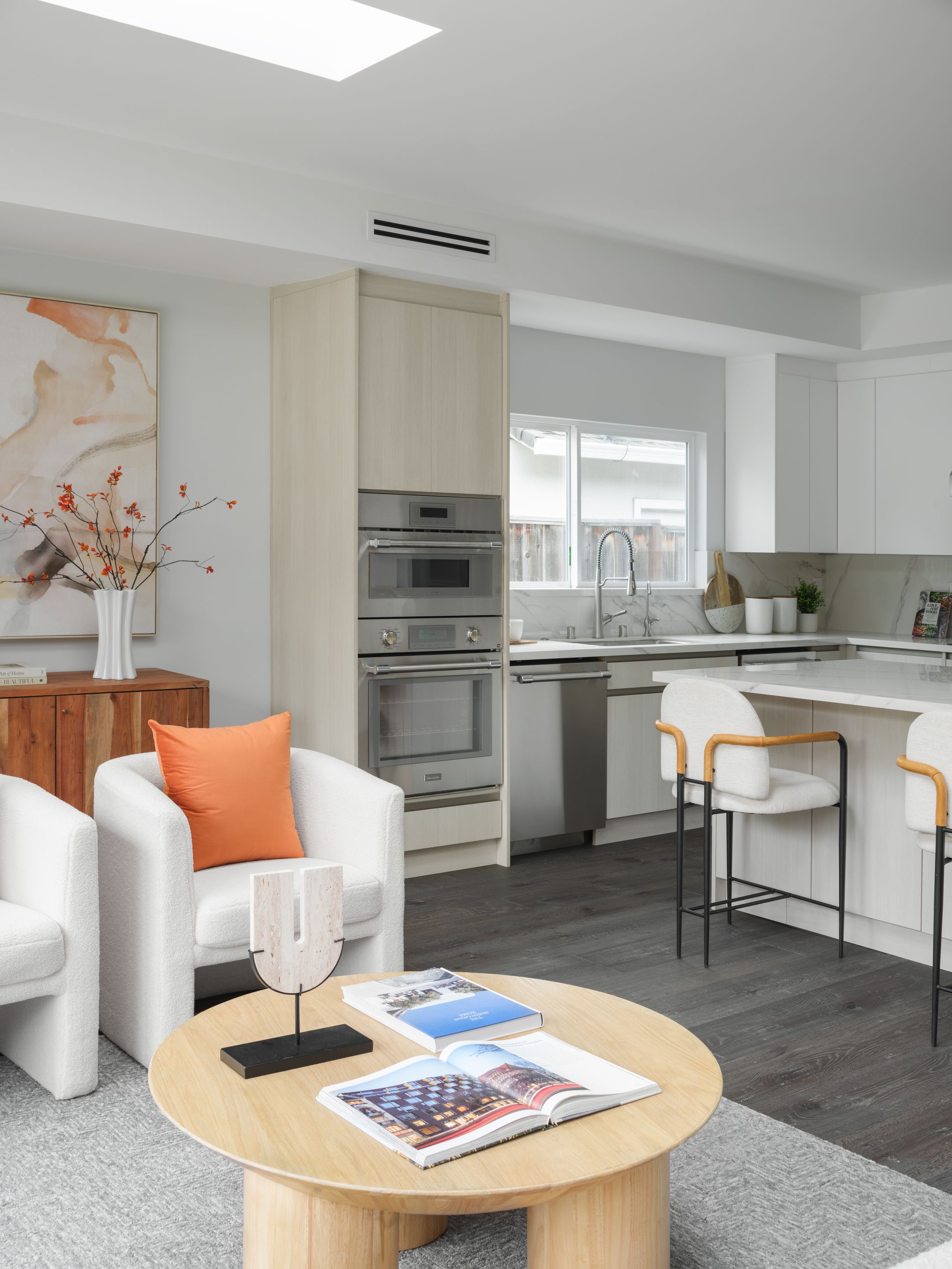
A late-summer staging budget should first address the spaces that shape a buyer’s daily routine. Begin with the living room, kitchen, primary suite, office, and strongest outdoor area. Secondary bedrooms still need clear proportions, but they rarely deserve the same inventory weight as the rooms that define the property.
In the kitchen, remove countertop clutter and leave a few tactile materials: a wood board, a ceramic vessel, or a folded linen towel. Replace burned-out bulbs and correct mixed color temperatures so cool ceiling light does not clash with yellow pendants. If cabinet hardware looks worn, a restrained update may improve the close-range experience, but avoid cosmetic changes that create a mismatch with the room’s permanent finishes.
The office should read as a real work area, not a spare bedroom with a narrow desk pushed against the wall. Use a properly scaled desk, a supportive chair, task lighting, and controlled storage. Keep cables out of sight. A closed door, soft rug, and upholstered chair can also suggest acoustic separation from the main household.
In the primary suite, buyers should see a calm route from the doorway to the bed, bath, and closet. Crisp cotton, a textured coverlet, substantial bedside lighting, and limited artwork usually communicate more value than layers of decorative pillows. In the bathroom, clear personal products and use towels with enough weight to hold a clean fold.
A wellness area requires similar clarity. Do not label an empty corner as a gym and expect buyers to complete the idea. A mat, bench, neatly stored weights, and a mirror can establish function without crowding the floor. If the property offers a separate studio, pool house, or flexible room, stage one primary use rather than several competing possibilities.
Homeowners comparing luxury home staging in the Bay Area can review our services to understand the difference between consultation and full installation. Related visual examples are also available in our portfolio.
Prepare for comparison with newer construction
Existing Saratoga homes increasingly compete with buyers’ expectations of new construction, even when the two properties differ in lot size, architecture, or neighborhood position. Newer homes often present bright surfaces, integrated lighting, clean window treatments, and rooms with obvious functions. The air smells new, the hardware feels consistent, and buyers see little immediate work.
That comparison may become more visible over time. San José Spotlight reported that Saratoga approved the reduced Vineyard One redevelopment with 64 residences, including 52 single-family houses and 12 accessory dwelling units. The developer indicated that the single-family homes would likely sell around the $4 million range.
An existing home does not need to imitate a new build. In fact, stripping away its architectural identity can make the listing less persuasive. Instead, reduce the perceived condition gap. Update dated light fixtures where appropriate, repair visibly worn finishes, use contemporary but quiet furniture, and keep the kitchen presentation polished. Let established trees, broader rooms, natural materials, or garden depth provide the distinction.
Pay attention to touchpoints buyers encounter at close range: the front-door handle, cabinet pulls, switch plates, closet doors, and sliding-door tracks. A buyer may admire sunlight across an oak floor, then feel resistance when opening the patio door. Staging creates the visual frame; preparation makes that frame credible.
Treat the first 13 days as a launch, not a trial
With Saratoga’s June median market time at 13 days, the early listing period carries disproportionate weight. Photography, landscaping, repairs, window cleaning, staging, and marketing should be complete before the listing activates. A half-furnished terrace or an uncorrected lighting issue cannot help the photographs once they begin circulating.
This is especially important while borrowing costs remain elevated. Freddie Mac reported an average 30-year fixed mortgage rate of 6.58% on July 23, with the 15-year rate at 5.96%. Affluent buyers may have several financing options, but higher rates can still sharpen their attention to condition, renovation costs, and value.
Plan one coordinated prelaunch review in natural daylight and another near the hour scheduled for photography. In daylight, check window glare, furniture scale, glass, landscaping, and room-to-room sightlines. Later, turn on every lamp and exterior fixture. Look for dark corners, mismatched bulbs, and reflections in mirrors or black television screens.
The objective is not to predict every buyer preference. It is to remove preventable reasons for hesitation. When the front hedge is clipped, the entry feels cool and quiet, the living room opens naturally to the terrace, and each major room has a clear purpose, buyers can focus on the property rather than the work waiting behind it.
For a late-summer Saratoga sale, that is the staging priority: make the house legible at first glance and convincing at close range.
Frequently Asked Questions
- When should I start Saratoga home staging?
- Start before listing photography, not after the home goes live. Repairs, landscaping, cleaning, furniture installation, and lighting adjustments should be coordinated so the property is fully prepared for its first public appearance.
- Which rooms matter most when staging a luxury Saratoga home?
- Prioritize the living room, kitchen, primary suite, office, and strongest outdoor entertaining area. These spaces help buyers understand daily life in the property and usually carry more influence than secondary rooms.
- Is a vacant luxury home easier to sell than a staged home?
- Not automatically. Vacant rooms can make scale difficult to judge, particularly in homes with high ceilings or open floor plans. Selective furniture can clarify proportions, circulation, and room function.
- How should I stage indoor-outdoor living for late summer?
- Use clear sightlines, appropriately scaled exterior furniture, clean glass, refreshed landscaping, consistent materials, and warm evening lighting. The indoor and outdoor zones should read as one continuous living experience.
- Can staging justify a higher asking price?
- Staging can clarify scale, function, and lifestyle, but it cannot replace accurate pricing or necessary repairs. Sellers should use current neighborhood comparables and treat staging as support for the asking price.


