Selling a Condo in Fremont: Stand Out This Fall
Compare nearby listings, then show buyers how your living, dining, and work spaces actually function.

Selling a Condo in Fremont: Stand Out This Fall
Compare nearby listings, then show buyers how your living, dining, and work spaces actually function.
Start With the Listings a Buyer Will Open Beside Yours
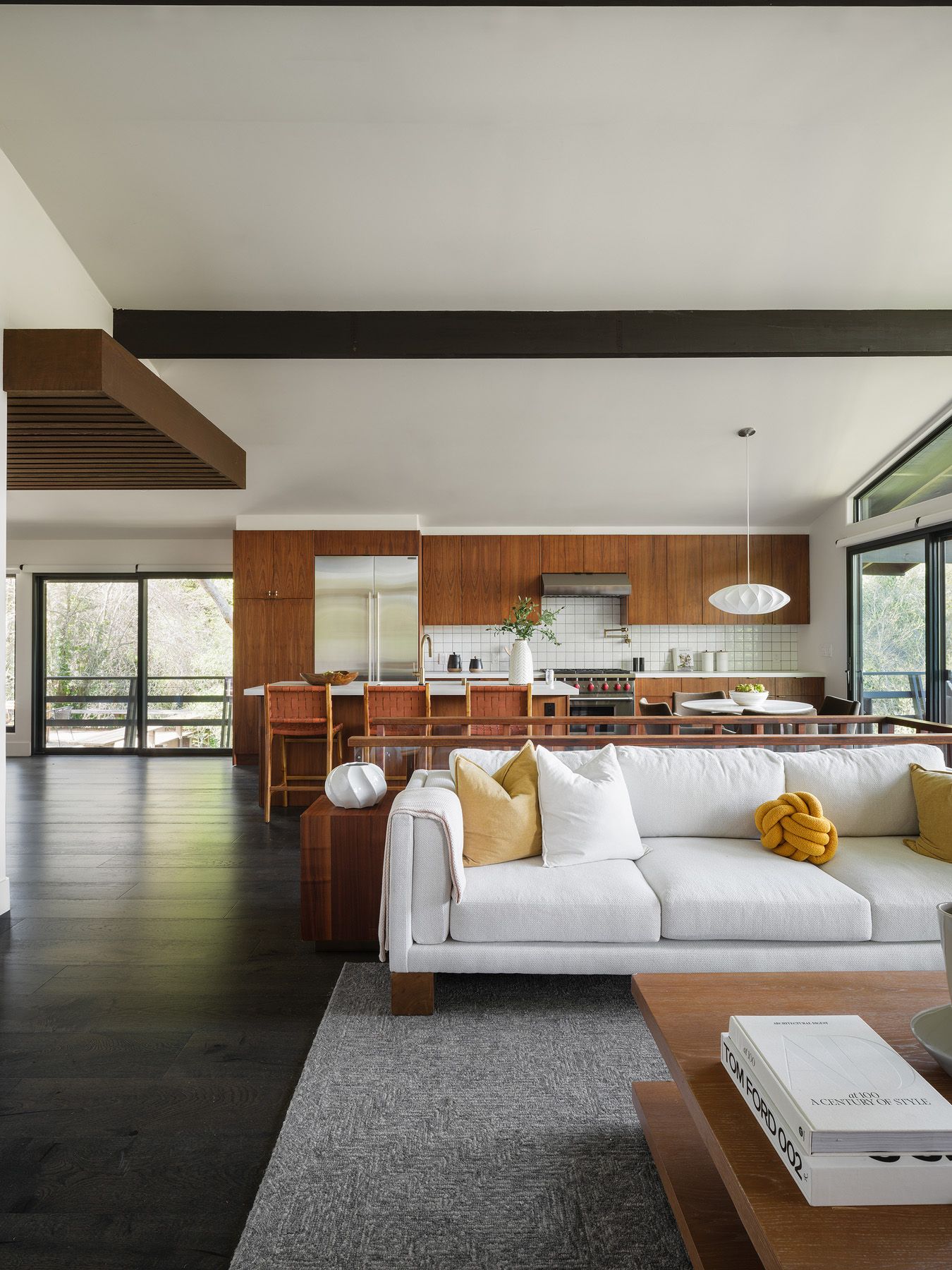
A buyer opens your listing, then another condo in the same development. The kitchens look similar. So do the floors. But in one photo, a bulky sectional blocks the balcony door; in the other, the route from the sofa to the dining table reads clearly. If you’re selling a condo in Fremont this fall, that side-by-side comparison is a useful place to begin.
Our position is straightforward: staging should prove that a condo works, not simply decorate it. Buyers shouldn’t have to guess whether they can host dinner, walk around the bed, or take a video call without moving the kitchen chairs. Show those uses with furniture that fits and photographs that explain the layout.
That doesn’t mean presentation can override an unsupported asking price. It means your listing can give buyers something more useful to evaluate than matching countertops and a square-footage total. A clear walking path and a comfortable dining arrangement help explain what the floor plan offers.
Before buying accessories or moving furniture, ask your agent which available condos a buyer would reasonably tour alongside yours. Start within your complex, then widen the search to comparable developments nearby. The goal isn’t to copy another seller’s rooms. It’s to understand the comparison your own rooms need to withstand.
Staging should prove that a condo works, not simply decorate it.
Read the Market Without Borrowing the Wrong Benchmark
The Fremont condo market needs a narrower lens than a citywide headline. According to Redfin’s Fremont housing-market data, the median sale price across all home types was $1,499,249 for the three months ending July 2026, down 5.0% year over year. Median days on market were 16, compared with 20 a year earlier. Those are mixed-property figures, not a valuation benchmark for your condo or August-only results.
The more relevant property-type context comes from Kinoko Real Estate’s August report covering July. Its Alameda County compilation reported 4.4 months of condo supply, versus 1.9 months for single-family homes. Months of supply estimates how long available inventory would last at the current sales pace. This county-level comparison suggests more negotiating room in condos; it doesn’t establish conditions in your particular complex.
The same report put average condo marketing time at 22 days, down year over year. More supply relative to detached homes can coexist with faster sales than last year. We don’t have verified current Fremont condo-only prices, inventory, or selling-time figures in the research behind this article.
Use that context to ask better questions, not to predict your closing date. The sunlit corner unit upstairs and a ground-floor unit facing a walkway may offer different trade-offs. Your agent’s current, property-specific comparisons should guide pricing.
Build a Comparison Sheet That Leads to Decisions
Review active, pending, and recently sold condos with your agent, keeping each category separate. Active listings show the alternatives buyers can choose now. Pending listings indicate a seller accepted an offer, but the final price may remain unknown. Closed sales provide completed transaction evidence. An ambitious active asking price isn’t proof of value.
For each credible comparison, record the layout, size, condition, floor level, parking, outdoor space, and verified HOA dues. Note what those dues include rather than comparing the dollar amounts alone. Ask your agent to identify material differences in building amenities or association circumstances using available documentation.
Then study the photographs as a buyer would. Can you see where dining happens? Does the living room accommodate conversation without blocking a doorway? Is the advertised workspace an actual desk with room for a chair, or just a laptop balanced on a console? Notice window light, furniture depth, and the paths between rooms.
Translate that review into a short preparation brief. For example: keep the balcony doorway visible, show a dining setup that can stay in place, and demonstrate a workspace outside the main seating area. Those are actionable decisions. “Make it look more expensive” isn’t. For anyone selling a condo in the Bay Area, this comparison method helps keep preparation tied to the property rather than broad regional headlines.
Show Living Space Through Furniture Fit
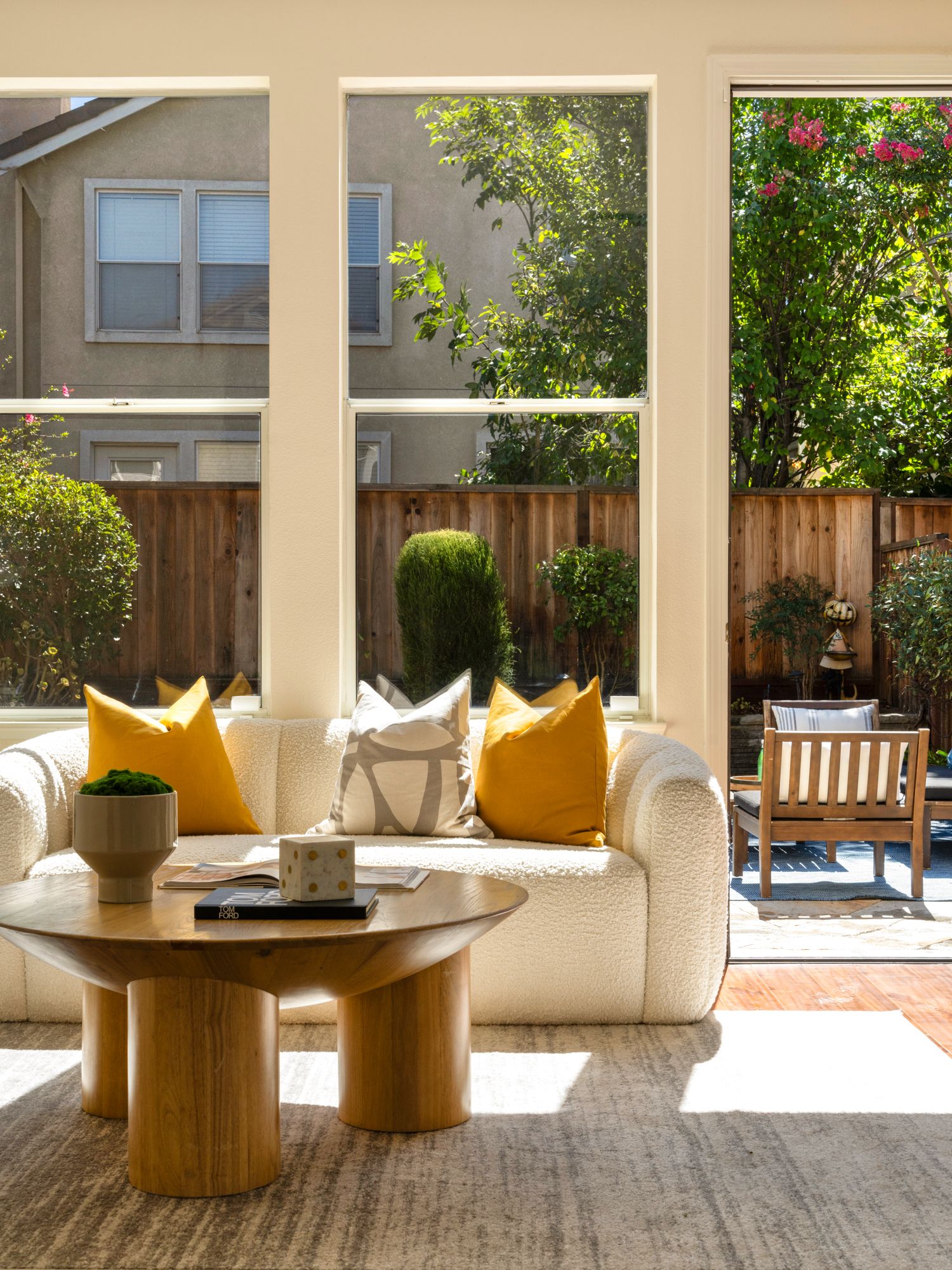
Empty floor area doesn’t automatically explain a room. In a vacant condo, buyers may struggle to judge whether their seating will fit. In an occupied condo, an oversized sofa can conceal usable space. Start by measuring the room and the furniture, including the depth of chairs and the swing of nearby doors.
For Fremont condo staging, choose seating that supports the room’s actual use without swallowing its circulation space. A shallower sofa, an upholstered chair, and a visually lighter coffee table may explain the layout better than a deep sectional. The right arrangement depends on the floor plan; small furniture everywhere can make a room feel less useful, too.
Consider an illustrative layout, not a Mia project: a living room with a balcony door beside the main window. If a chaise cuts across that route, rotate or replace the seating before adding anything decorative. Keep a clear path to the door, then use a textured rug to connect the seating pieces visually.
Test the arrangement in person. Walk through with a bag over your shoulder. Open the balcony door fully. Sit down and check whether the table is reachable. If the condo has outdoor space, furnish it to its actual scale without obstructing access. A usable balcony is worth showing, but don’t describe it as additional interior square footage.
Let the Dining Area Demonstrate Real Capacity
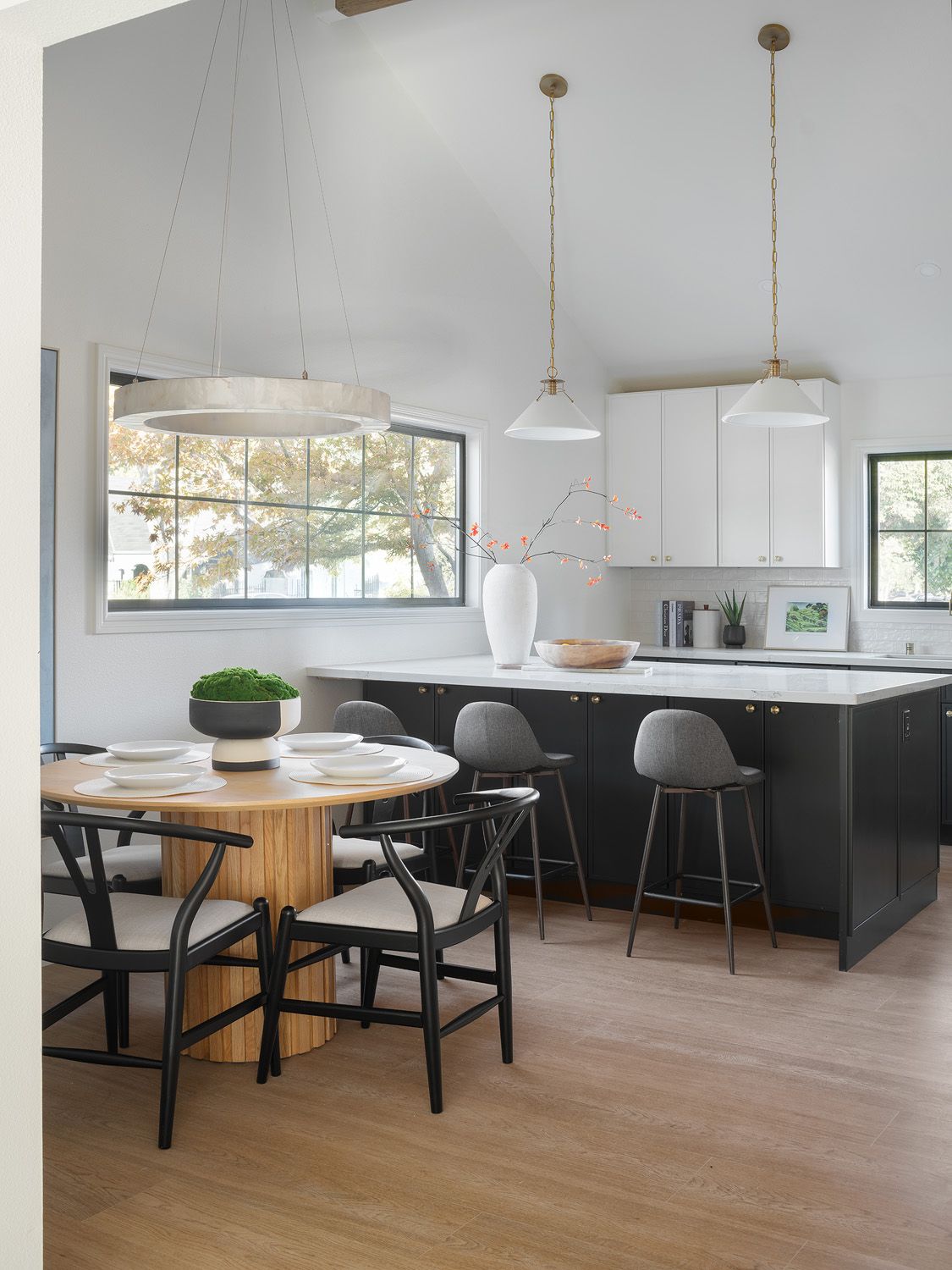
A dining area loses credibility when every chair sits tightly tucked beneath the tabletop. Buyers need to understand what happens when someone actually sits down. Pull chairs out, check the passage behind them, and confirm that the arrangement doesn’t block a cabinet, entry, or balcony door.
Choose the table shape after checking the room. A round table can ease movement around corners in some layouts; a rectangular table may sit more naturally alongside a long wall. Neither shape solves every narrow dining area. Measure the available space and test the furniture rather than choosing from a photograph alone.
Keep the styling quiet. A low ceramic bowl or a linen runner can add texture without hiding the table’s surface. Avoid elaborate place settings that make it difficult to read the table’s size. If the kitchen counter offers seating, show that function honestly, but don’t assume counter stools answer every buyer’s need for a dining table.
This is where restraint earns its place. Removing a deep sideboard may preserve a more comfortable dining arrangement without changing the room itself. The goal isn’t to suggest entertaining capacity the condo cannot support. It’s to demonstrate the capacity it already has, with enough clearance that buyers can picture an ordinary meal rather than a carefully balanced photo setup.
Make the Workspace Believable, Not Decorative
A desk placed under a window communicates possibility. A desk that blocks the window, crowds the bed, or leaves no space to pull out a chair communicates compromise. Work-from-home flexibility needs the same furniture-fit test as living and dining areas.
Look for a location with usable daylight, access to an outlet, and a workable seat position. Check glare on a screen during the hours the room receives direct sun. Tidy visible cords without concealing access problems, and leave enough desk surface for ordinary work. A narrow shelf styled with a closed laptop may not demonstrate a practical workstation.
Also consider sound and privacy. A desk beside the kitchen may support occasional work, while a separate room offers a different level of separation. Present that distinction honestly. Don’t label a desk corner as a dedicated office or imply that a staging arrangement changes the property’s permitted room count.
If space is tight, choose the most credible use instead of forcing every possible function into the photograph. In a bedroom, preserve access around the bed and to the closet before adding a desk. A small lamp and a matte desktop can make a workspace legible without turning the room into an office showroom. The arrangement should answer a buyer’s question, not create another obstacle.
Bring the Layout, Photos, and Ownership Details Together
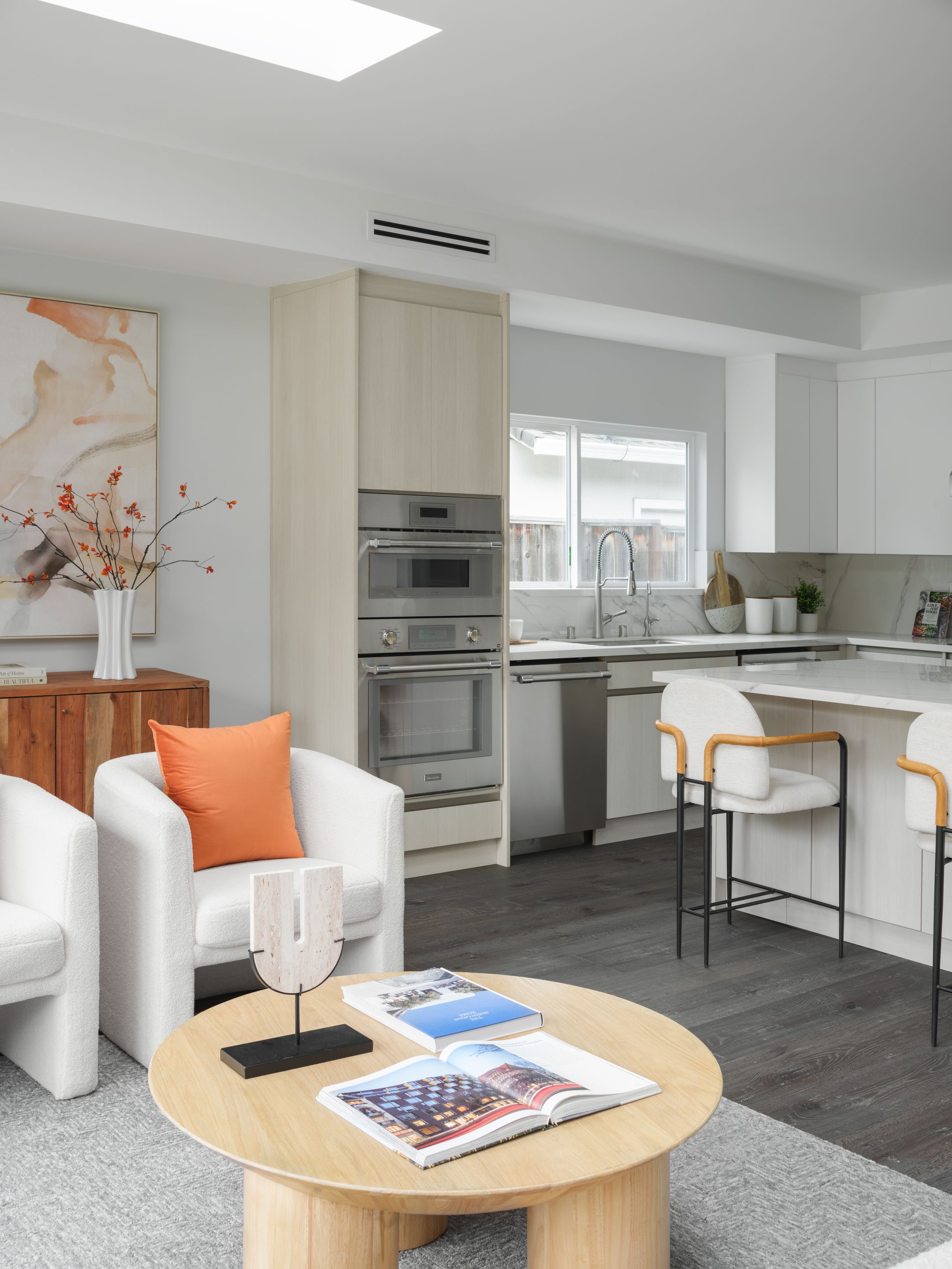
Once the furniture works, prepare the rooms for photography. Clean window glass, open coverings where privacy allows, and check for inconsistent bulb colors. Aim for photographs that preserve the home’s actual proportions and light. An unusually stretched wide-angle view may attract attention online but leave buyers questioning the room when they arrive.
Plan images that explain connections: living to dining, dining to kitchen, and seating to outdoor space where applicable. Include a clear view of the workspace without sacrificing the room’s main purpose. Keep fall styling restrained so seasonal decorations don’t cover useful surfaces or distract from the layout.
Pair that visual clarity with verified ownership information. Work with your agent to prepare accurate HOA dues, included services, and available association documents, and to address known assessments through the appropriate process. Staging doesn’t replace those details. It also doesn’t guarantee a higher sale price or a shorter listing period.
Mia’s Home Staging offers physical staging and consulting for Bay Area sellers. Physical staging uses rented furniture to explain vacant rooms; consulting can help identify layout and preparation priorities. Review our staging portfolio for furniture scale and room connections, then explore our services to understand the options. The fall preparation plan should connect realistic pricing with rooms that make their everyday uses clear.
Frequently Asked Questions
- Which listings should I compare before selling a condo in Fremont?
- Start with active, pending, and recently sold condos in your complex, then consider nearby comparable developments with your agent. Compare layout, size, condition, floor level, parking, outdoor space, and verified HOA costs. Keep active asking prices separate from completed sale prices.
- What should condo staging prioritize when space is limited?
- Prioritize furniture that fits, clear walking paths, and believable living and dining arrangements. Add a workspace only where a desk and chair can function without blocking doors, closets, or the room’s main use.
- Can staging justify pricing above competing condos?
- Staging can help buyers understand a condo’s usable space, but it doesn’t establish market value or guarantee a price increase. Set pricing with your agent using relevant property comparisons and current conditions.
- Can I prepare my condo without fully furnishing it with rental pieces?
- A staging consultation can help identify whether rearranging, removing, or selectively replacing existing furniture would clarify the layout. Vacant rooms may benefit from physical staging so buyers can judge furniture fit and everyday use.


