Quiet Luxury Interior Design for Bay Area Sellers
A seller’s guide to restrained color, natural texture, sculptural light, and better editing.
Quiet Luxury Interior Design for Bay Area Sellers
A seller’s guide to restrained color, natural texture, sculptural light, and better editing.
Quiet luxury starts with what buyers notice at the door
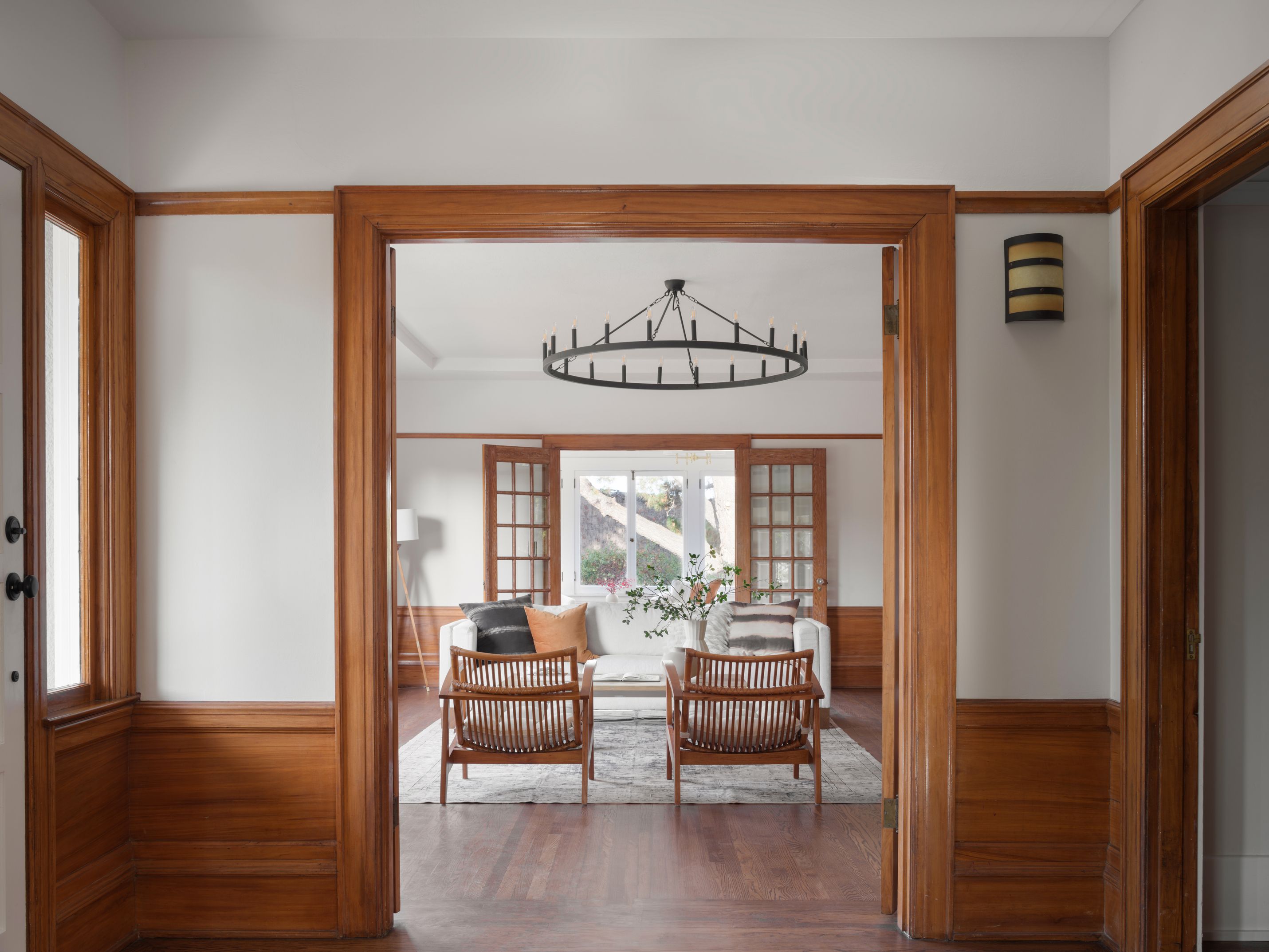
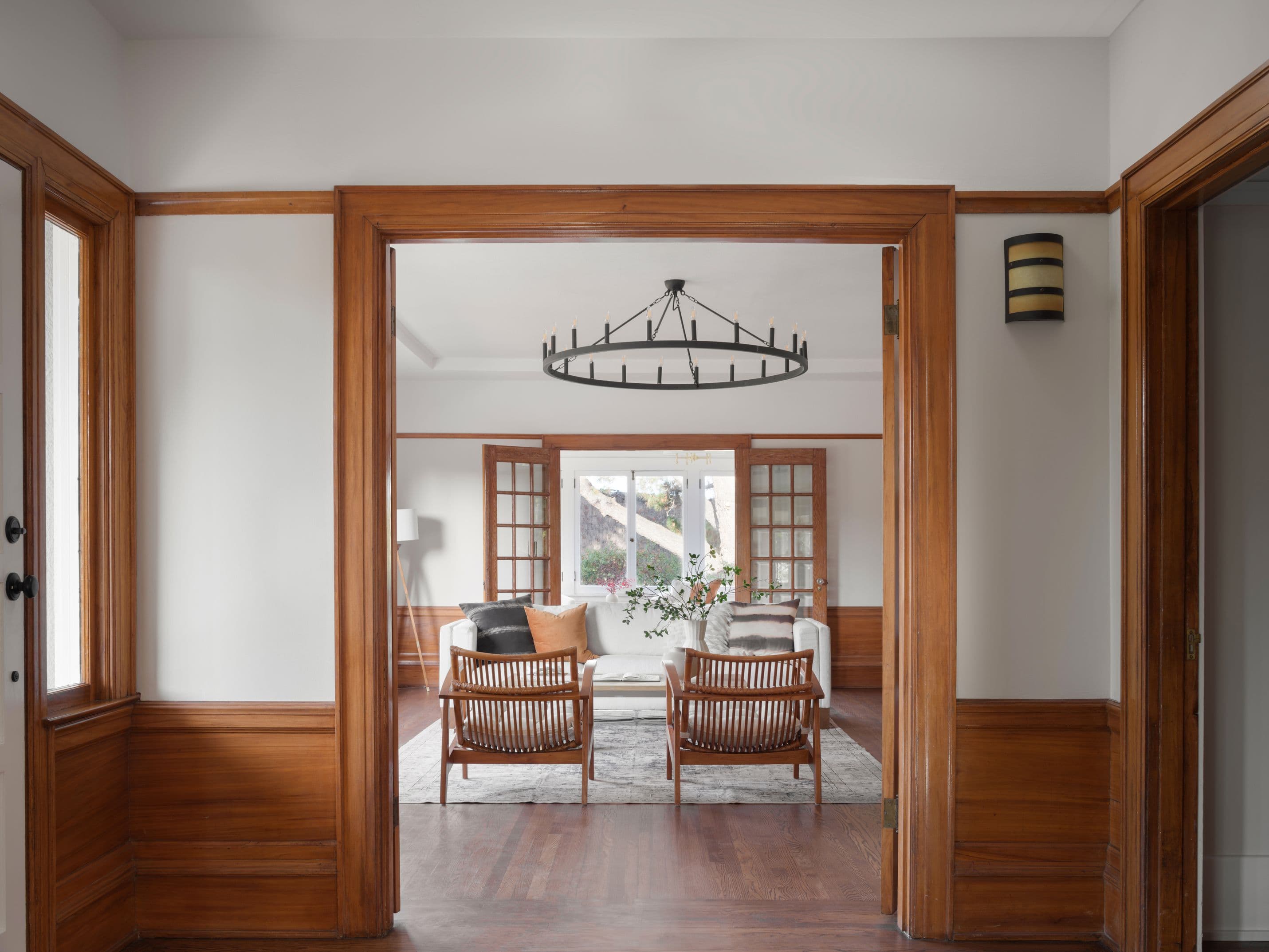
Late-afternoon light crosses an oak floor. The living room holds a linen sofa, a stone table, and enough open space to see the baseboards and windows clearly. Nothing calls for attention, yet the room feels considered. That is the practical value of quiet luxury interior design when preparing a Bay Area home for sale.
Quiet luxury does not mean filling a listing with expensive labels. It relies on proportion, material, light, and editing. Buyers may not identify the wool rug or honed stone by name, but they register the tactile combination. The house feels calm, substantial, and easier to understand.
That distinction matters in staging, which means arranging a vacant or occupied home so buyers can picture living there. A heavily decorated room asks buyers to process the seller’s taste. A restrained room gives the architecture more room to speak. My view is direct: quiet luxury works best when buyers notice the home before they notice the furniture.
Quiet luxury works best when buyers notice the home before they notice the furniture.
Let the architecture set the design direction
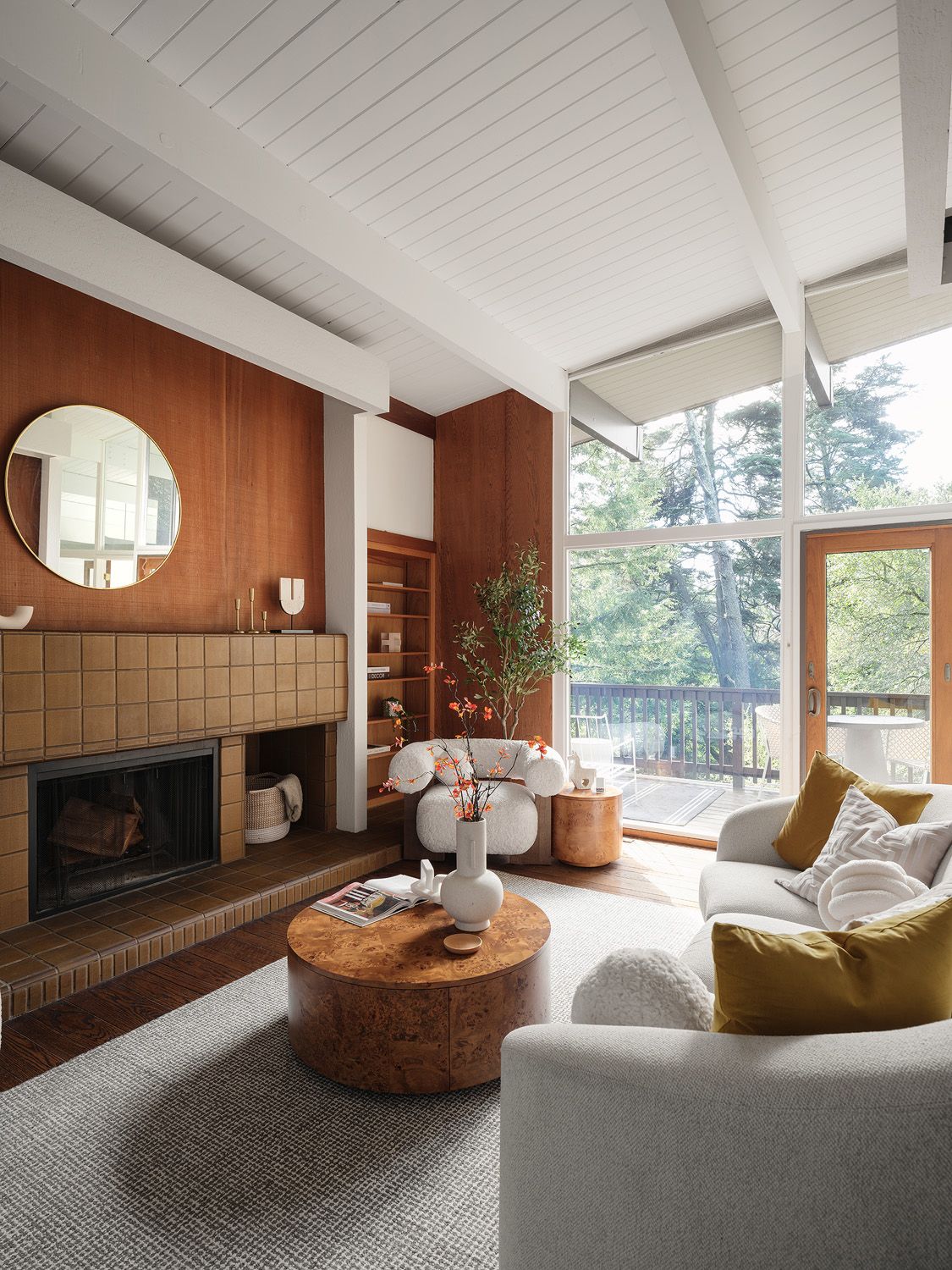
Before selecting furniture, identify what the house already does well. It might have a wall of glass, a broad fireplace, exposed ceiling beams, or a compact dining area with clear morning light. These features should determine the furniture plan. A low sofa can preserve a view, while a round dining table can ease circulation through a narrow room.
This is where luxury home staging in the Bay Area should begin: with the property, not a preset furniture package. A tailored plan considers ceiling height, window placement, floor tone, and the visual weight of built-ins. Pale upholstery may suit a room with dark woodwork, while deeper olive or tobacco accents can give a bright white interior needed depth.
Resist the urge to create a design moment in every corner. If a fireplace already anchors the room, it does not need competing art, tall branches, several metallic finishes, and an elaborate coffee table arrangement. Orient the seating toward the architectural feature, keep the path through the room clear, and allow a little wall space to remain empty.
Build a restrained palette that still feels warm
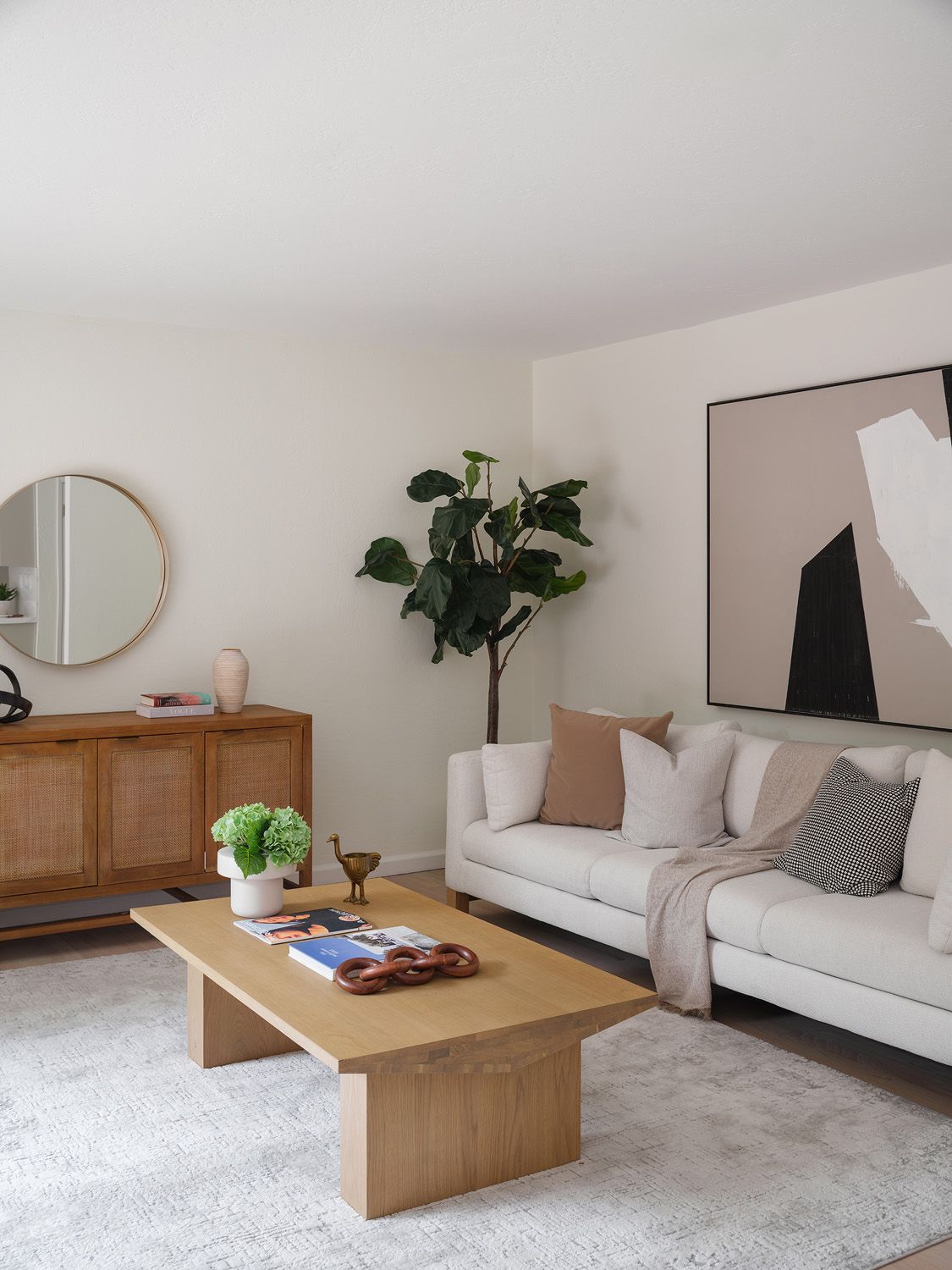
Quiet color is not the same as colorless design. An all-white room can look thin under cool daylight, especially when the upholstery, rug, and walls share the same flat undertone. A stronger palette layers warm ivory, mushroom, sand, putty, soft brown, or muted green. Each shade stays subdued, but the room gains dimension.
Start with the fixed surfaces. Notice whether the flooring reads honey, gray, red, or neutral in natural light. Look at stone counters, tile, cabinetry, and metal finishes. Then choose furnishings that connect those elements rather than fighting them. A warm gray sofa beside honey-toned flooring often needs a camel pillow, walnut side table, or cream-and-brown rug to bridge the temperatures.
For sellers exploring quiet luxury home decor, repetition creates more polish than variety. Carry one wood tone into two or three rooms. Repeat aged brass in a lamp and a small table detail. Use the same warm white across visible connecting spaces when repainting makes sense. The result should feel continuous as buyers walk from the soft light of the entry into the brighter living area.
Use natural materials where hands and eyes meet
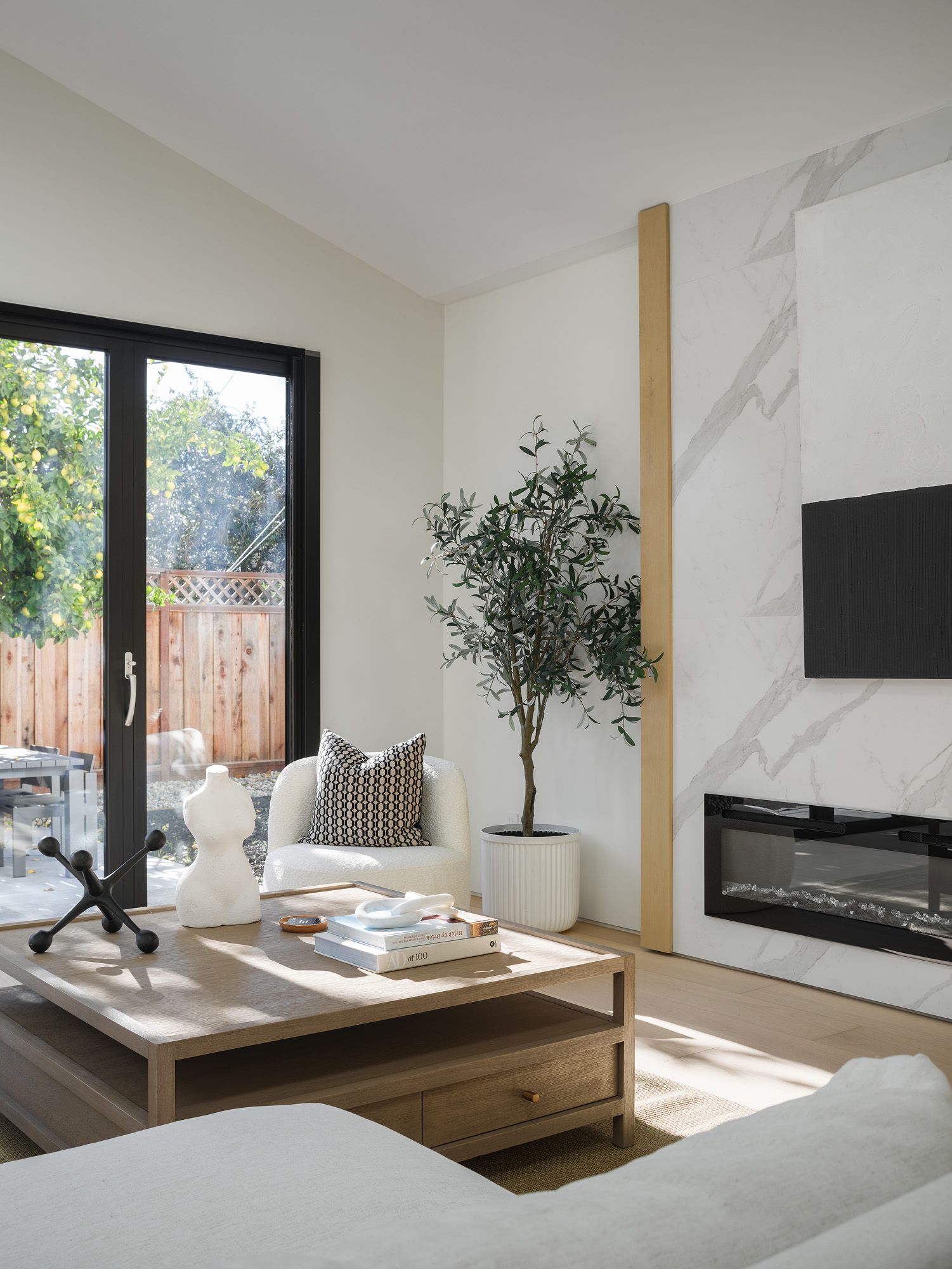
Material quality becomes most noticeable at close range. Buyers see the grain of an oak console, the irregular edge of a ceramic bowl, and the soft nap of a wool rug. These surfaces absorb and reflect light differently, giving neutral rooms visual depth without relying on bold pattern.
Focus natural materials where they carry the most weight: the coffee table, dining table, primary seating, rugs, and bedside surfaces. Linen, wool, oak, walnut, travertine, marble, leather, and hand-finished ceramics can all support the quiet-luxury look. They do not need to appear together. Two or three compatible textures usually create a clearer composition than a room crowded with samples.
Synthetic shine can weaken that effect. Glossy faux marble, highly reflective chrome, and slick polyester upholstery tend to bounce light sharply, particularly in listing photography. A matte stone surface or tightly woven fabric produces softer transitions between highlights and shadows. If the budget requires mixing material levels, place the richer textures near focal points and keep simpler pieces visually quiet.
Treat lighting as part of the furniture plan
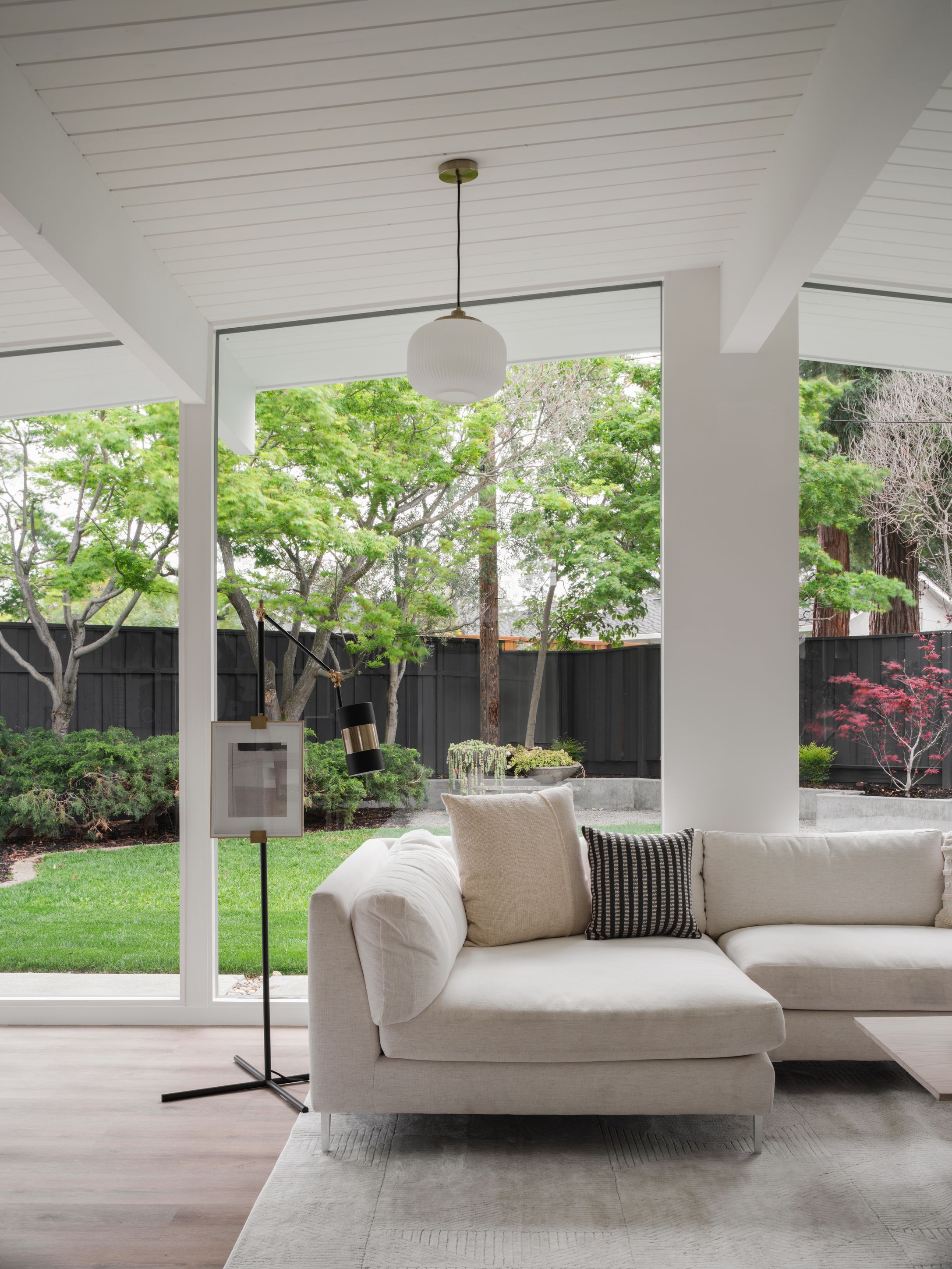
A room can have refined furnishings and still feel cold when a single ceiling fixture washes every surface with hard light. Quiet luxury depends on layers: daylight through sheer fabric, a shaded floor lamp beside a chair, and a table lamp casting a low pool of light across wood or stone.
Sculptural lighting adds shape without adding clutter. Consider a plaster pendant over a dining table, a linen-shaded lamp on a walnut console, or a curved metal floor lamp beside a blocky sofa. The silhouette should relate to the room. Rounded fixtures soften rigid architecture, while a clean linear pendant can bring order to an open dining space.
Before photography and showings, check how every bulb reads against the walls and fabrics. Mixed color temperatures can make one corner look blue and another yellow. Also watch for bare bulbs reflected in glass, dark corners beside tall cabinetry, and pendant fixtures hung out of scale with the table below. Good lighting should reveal texture and spatial depth, not announce the fixture’s price.
Good lighting should reveal texture and spatial depth, not announce the fixture’s price.
Choose fewer furnishings, then get the scale right
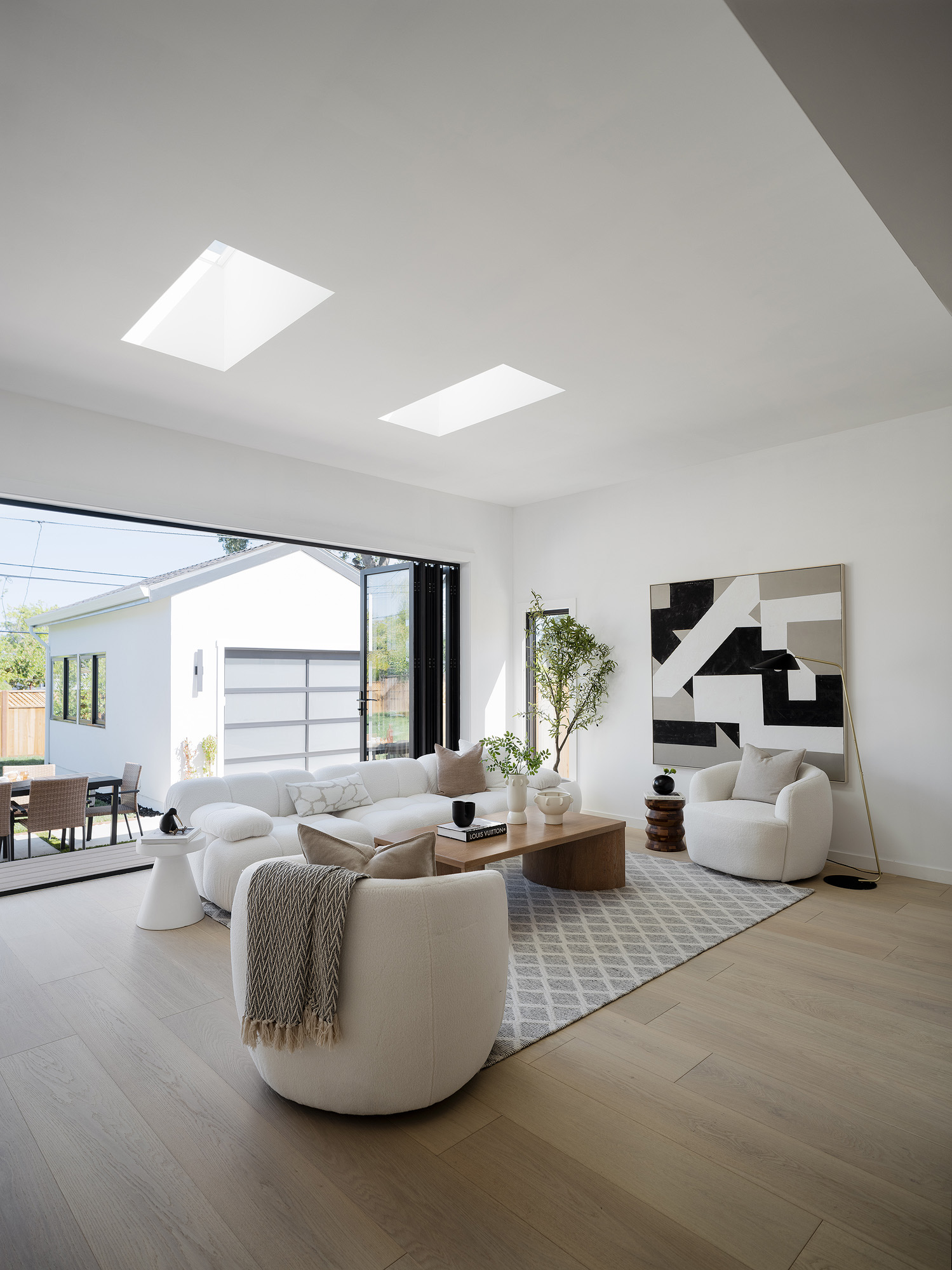
The “fewer, better” idea only works when the remaining pieces fit the room. One undersized sofa floating beside a large fireplace can make the living area feel awkward rather than spacious. On the other hand, an oversized sectional may cover floor area, narrow the walking path, and make buyers wonder whether their own furniture will fit.
Start with the largest functional piece and build outward. In a living room, that usually means the sofa. In a dining room, it is the table. In a bedroom, it is the bed and its relationship to windows, doors, and closets. Once those elements establish scale, add only what clarifies use: perhaps two chairs, one substantial table, and a rug wide enough to connect the seating.
Negative space is active design. A clear strip of flooring around a dining table helps buyers read circulation. An open corner beside a window lets natural light reach farther into the room. A mostly bare kitchen counter makes the work surface feel generous and keeps visual noise away from the stone, cabinetry, and fixtures.
This is also where editorial restraint separates considered staging from generic decorating. Remove accent chairs that do not support conversation. Skip tiny tables that appear nervous beside broad upholstery. Use art large enough to relate to the wall, but avoid filling every vertical surface. You can see how proportion and material work together in Mia’s Home Staging portfolio.
Edit each room around one clear message
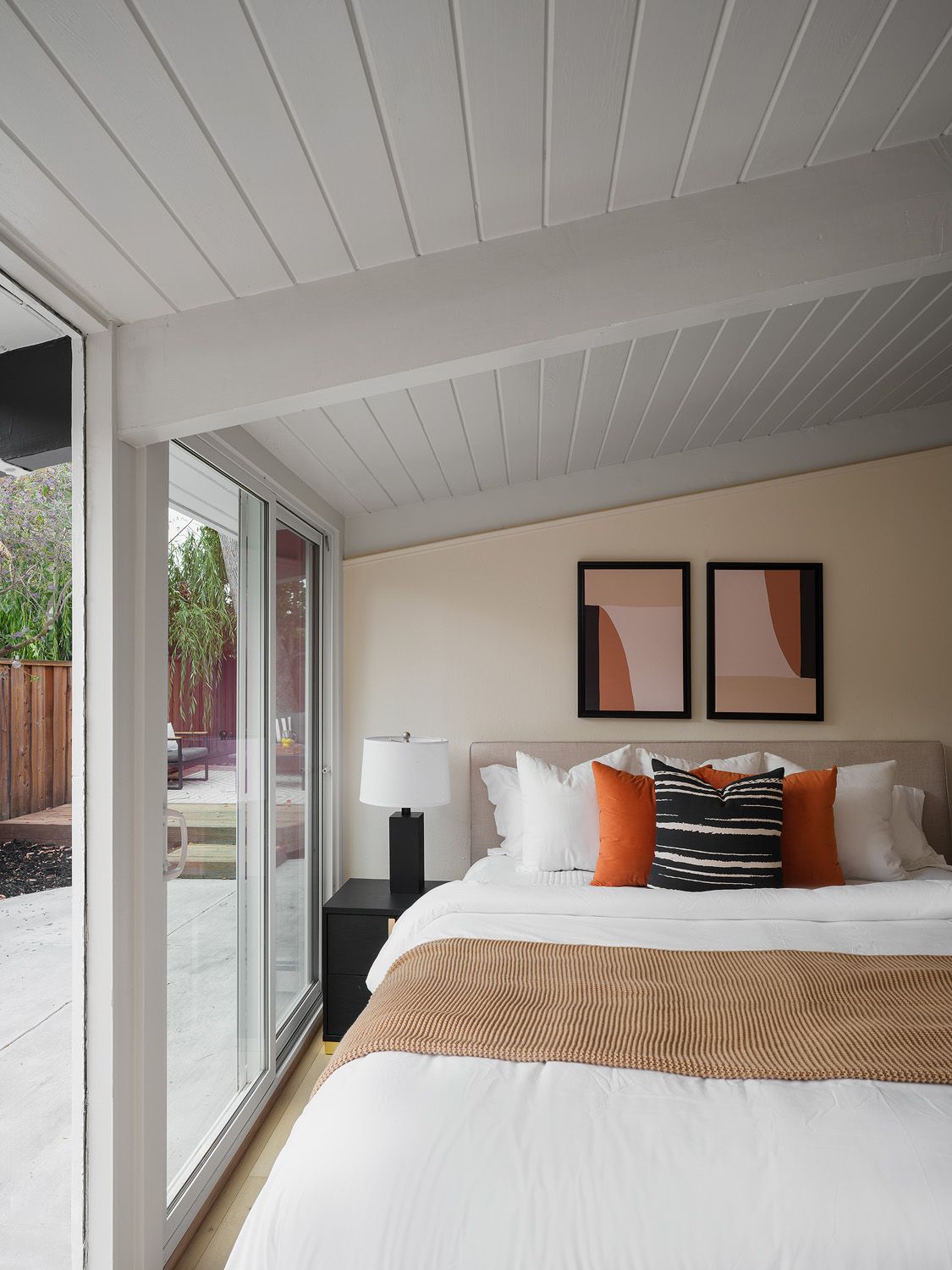
Interior design for selling a house differs from decorating for daily life because each room needs to communicate quickly. The living room should show comfortable gathering. The dining area should establish an obvious place to sit and share a meal. The primary bedroom should feel quiet, with breathable space around the bed and soft fabric absorbing the room’s echo.
In the kitchen, keep styling low and functional so it does not hide counters or interrupt sightlines. A wood board, a stoneware vessel, or a small branch can add texture without creating a display. In the bathroom, fresh white towels, clear glass, and one grounded material such as wood or stone usually read better than trays filled with bottles.
Remove items that introduce a loud trend without strengthening the property. Highly recognizable patterns, novelty shapes, and excessive boucle can date photographs quickly. The goal is not to erase personality; it is to create a coherent visual environment that supports more than one buyer’s taste. Warm wood, tactile textiles, and softly shaped lighting can provide character without taking over the listing.
Finish by walking through the home at the pace of a buyer. Look from the entry into the main room, then back toward the hallway. Listen for hollow spaces, notice where daylight stops, and check whether furniture blocks a door swing or view. For a tailored plan, review Mia’s Home Staging services before selecting or removing major pieces.
Aim for lasting appeal, not a luxury costume
Quiet luxury succeeds because it does not ask a house to pretend. A modest room does not need grand furniture, and a large room does not need layers of decorative objects to justify its scale. The strongest presentation respects the architecture, chooses materials with visible texture, and leaves enough space for buyers to imagine their own routines.
It also avoids the coldness that can come with over-editing. A folded wool textile, warm lamp light, a softly curved chair, or the grain of a wood table can make a neutral room feel lived-in without making it personal to the seller. These details give the eye somewhere to rest as buyers move through the listing.
For Bay Area sellers, the practical goal is not to chase a design label. It is to create rooms that feel calm, coherent, and valuable in person and on camera. When color, texture, lighting, and scale support one another, the home communicates care without relying on visual excess.
Frequently Asked Questions
- What is quiet luxury interior design?
- Quiet luxury interior design uses restrained color, tactile natural materials, balanced proportions, sculptural lighting, and limited decoration. The focus stays on craftsmanship and spatial clarity rather than visible labels or fast-moving trends.
- Is quiet-luxury staging expensive?
- Not necessarily. Sellers can focus spending on high-impact pieces, such as a correctly scaled sofa, a substantial rug, or improved lighting, while keeping secondary furnishings simple. Editing existing items can also make a meaningful difference.
- Which colors work for quiet luxury home decor?
- Warm ivory, sand, mushroom, soft brown, muted green, and other low-contrast shades often support this approach. The existing flooring, stone, cabinetry, and daylight should guide the final palette.
- Can quiet-luxury staging increase a home’s sale price?
- Quiet-luxury staging can help a home feel coherent, calm, and carefully maintained. It cannot guarantee a sale price or timeline, but it can present the property’s architecture and functional spaces more clearly to buyers.


