Occupied Home Staging Bay Area: Keep, Store, Replace
A room-by-room plan for listing your home without moving out or replacing everything you own.
Occupied Home Staging Bay Area: Keep, Store, Replace
A room-by-room plan for listing your home without moving out or replacing everything you own.
Start with the furniture, not the shopping cart

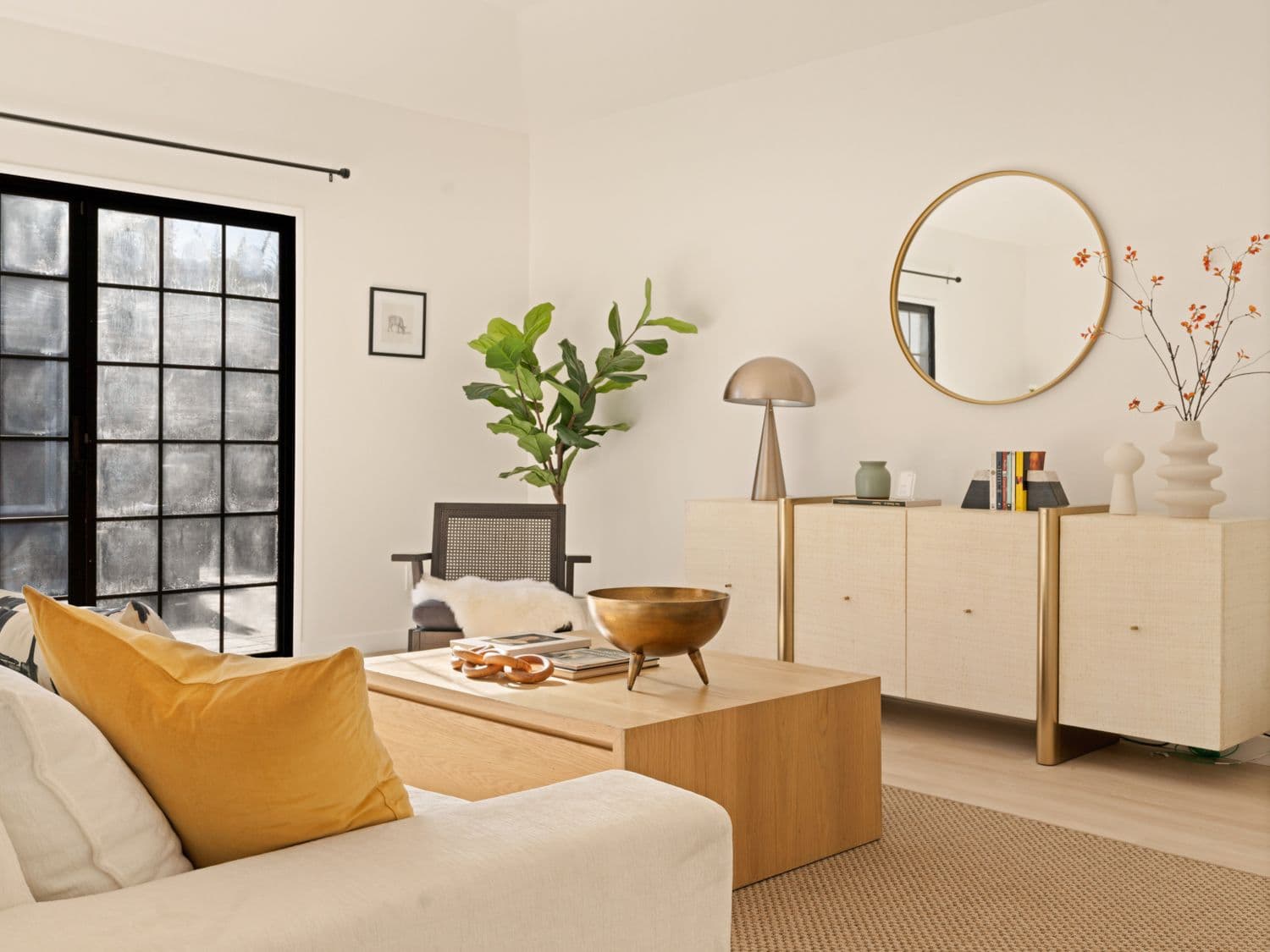
The sofa still works. The oversized chair beside it makes the route to the window feel tight, and the stack of mail catches your eye before the fireplace does. This occupied home staging Bay Area guide starts with that distinction: what helps someone understand the room, and what gets in the way.
Occupied staging means preparing a furnished home for sale while the seller still lives there. It can combine existing furniture, edited belongings, and selected additions. Unlike furnishing a vacant property, the work starts with what you own and the routines you need to maintain.
Our position is straightforward: replace a piece only when keeping it creates a problem that moving or editing cannot solve. A sofa doesn't need to be new; it needs to fit, look cared for, and leave the room easy to navigate.
Give each visible item a decision. Keep it if it supports the room's use and fits comfortably. Store it if it distracts, duplicates another piece, or narrows a path. Consider replacing it if its size, condition, or function still causes trouble after rearranging. Apply that test before buying accessories.
Replace a piece only when keeping it creates a problem that moving or editing cannot solve.
Entry: keep a landing spot, clear the arrival path
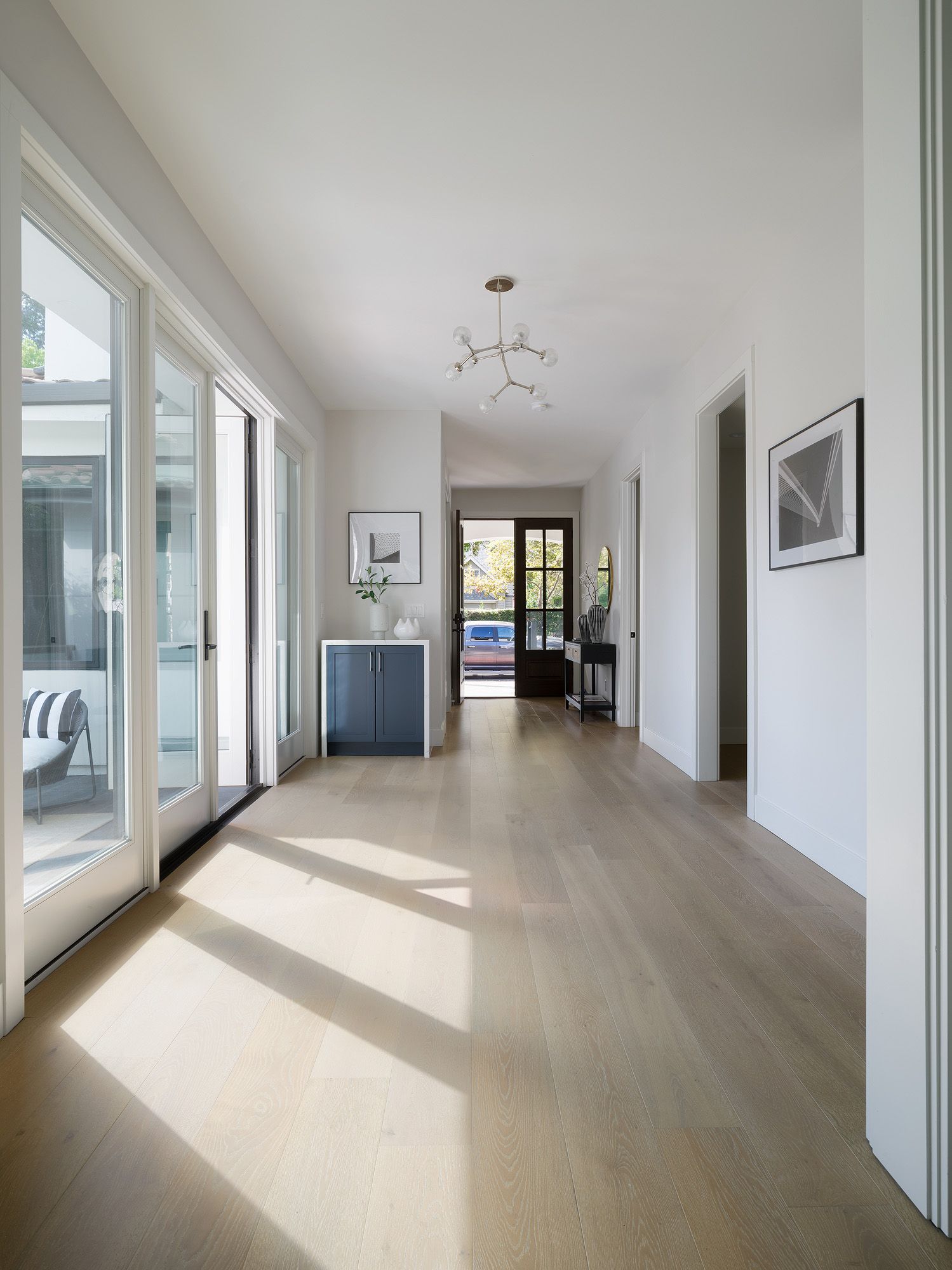
Open the front door fully and walk inside carrying a bag. Notice where you turn sideways, what blocks the light, and whether shoes interrupt your steps. The entry needs to work as a passage before it works as a styled photograph.
Keep a slim console or compact bench if it leaves comfortable clearance. Store the extra shoe rack, unused coat hooks, and bulky umbrella stand if they crowd the doorway. If the console's corners project into the walking route, remove it before deciding whether you need a smaller replacement.
Limit visible belongings to what you can manage consistently. A shallow tray can hold today's keys; it shouldn't become a collection point for receipts and charging cables. Move coats and bags into designated storage rather than hanging everything behind the door, where buyers may still see it.
Walk through at the time you expect showings. If the entry looks dim beside a bright living room, check the fixture and bulb before adding furniture. Keep cords out of the walkway, and avoid strong fragrances. Clean surfaces and clear floor space do more useful work here than additional decoration.
Living room: keep the seating that explains the space
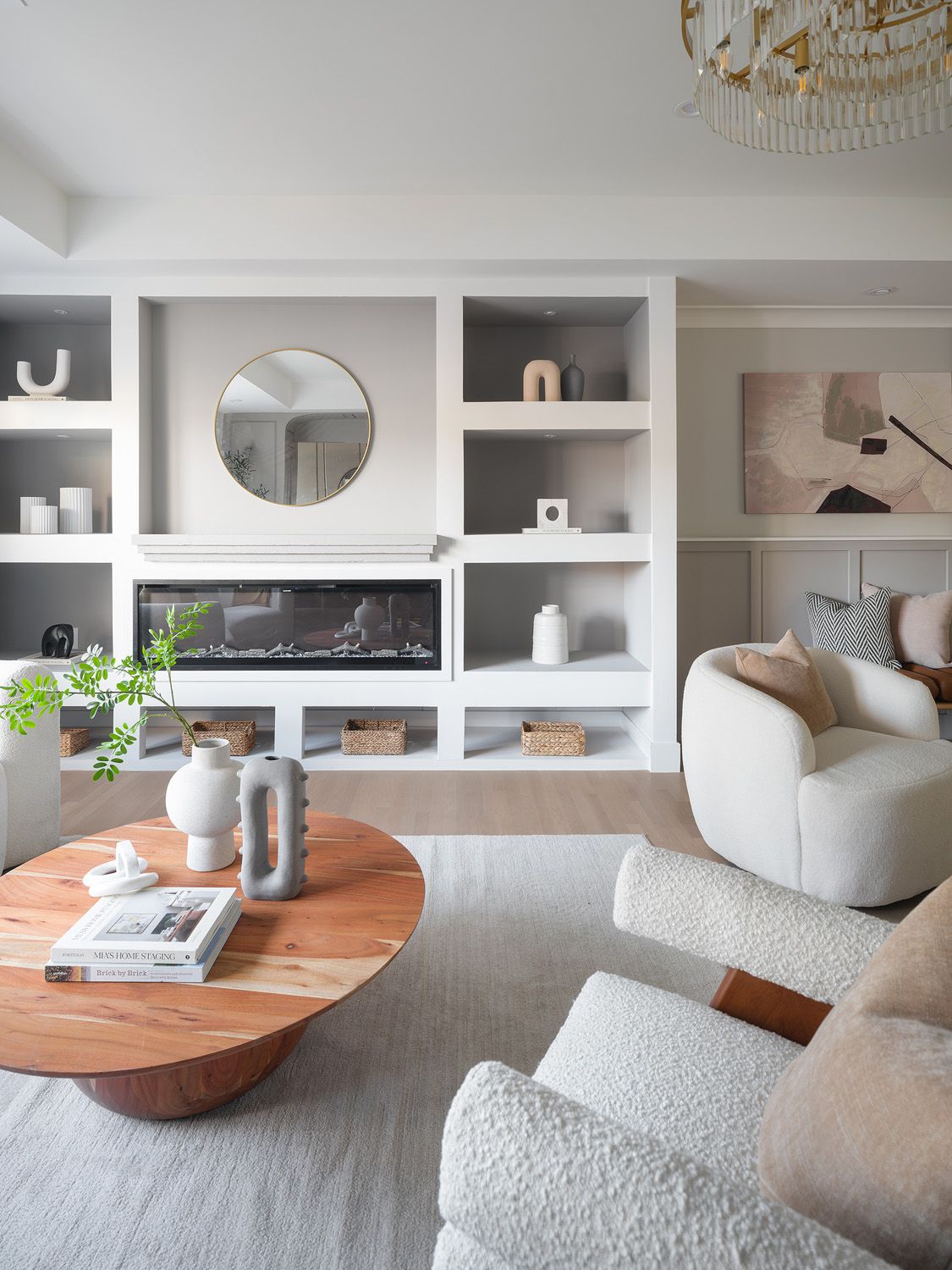
Home staging with existing furniture works best when you assess the arrangement before judging the upholstery. Start at the doorway. Can you see the window, fireplace, or other architectural feature? Can you reach the seating without stepping around a chair or squeezing past a table?
Keep the main sofa if its scale suits the room and its cushions and fabric look cared for. Store redundant seating, scattered side tables, and ottomans that interrupt circulation. Try rotating a chair or moving a bookcase before assuming the room needs rental furniture.
Consider a hypothetical living room with a deep sectional and a recliner beside the window. Removing the recliner may reveal the window trim and open the walking route. Replacing the sectional would add disruption without necessarily solving anything the simpler edit didn't already address.
Add selectively. A smaller coffee table may restore clearance; a lamp may give a shadowed corner a useful role. Keep textiles coordinated rather than identical, with a woven throw or textured cushion against smoother upholstery. Browse our staging portfolio for furniture placement and proportion, not a shopping list to copy.
Kitchen and dining: show usable surfaces
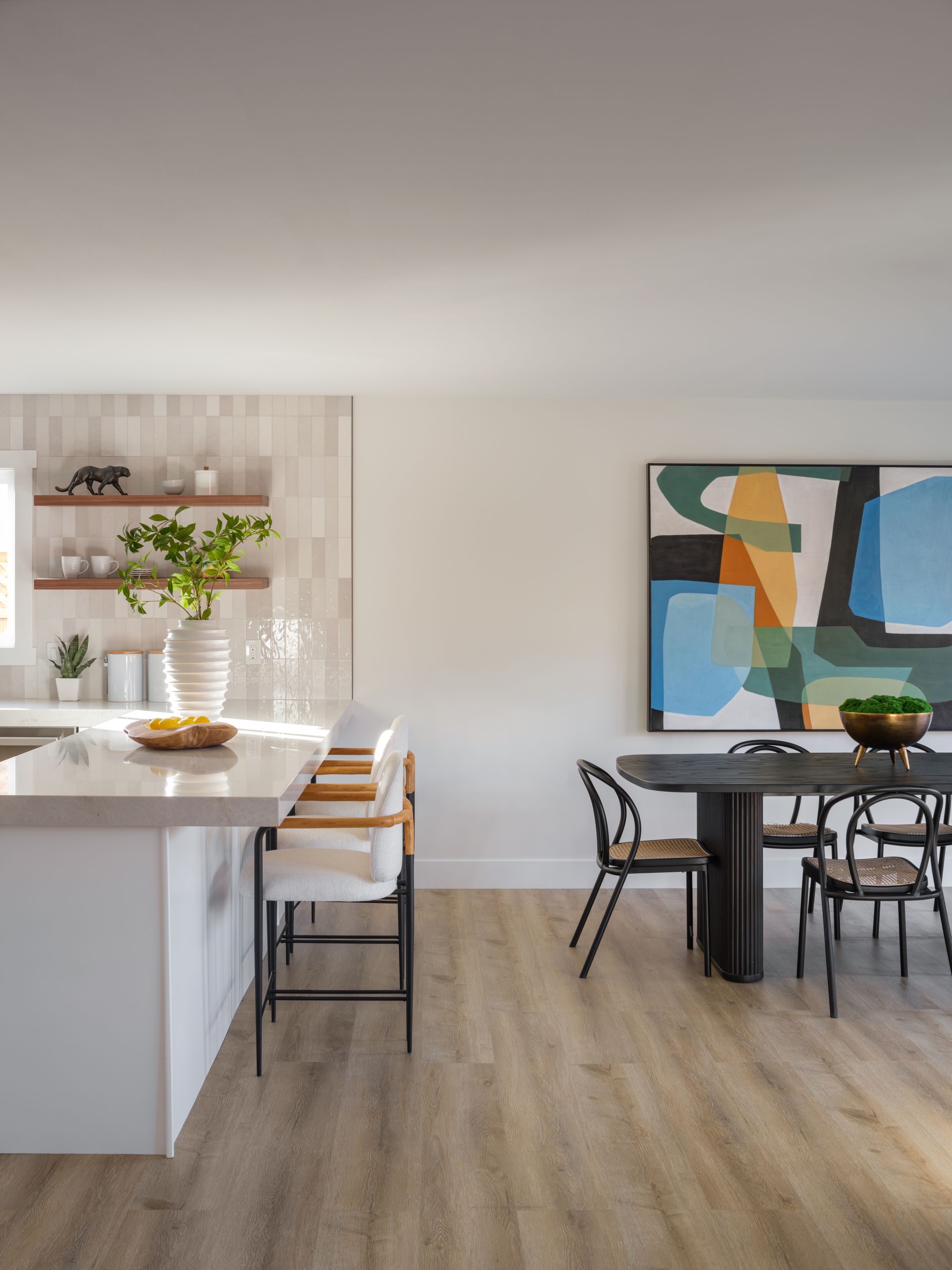
A kitchen counter should look available for preparing food, not merely cleared for a photograph. Keep the appliance you use daily if you have enough work surface around it. Store occasional-use equipment, surplus mugs, and the collection of bottles beside the stove.
Don't relocate everything into already-full cabinets. Buyers may open storage, and you still need access to your cookware. Pack what you won't use during the listing period, then arrange what remains so doors close easily and shelves don't require careful balancing.
In the dining area, keep the table if chairs pull out without colliding with nearby furniture. Store an extra leaf when the smaller configuration still serves your household and suits the room. Remove a sideboard if it forces people to edge sideways; consider a replacement table only when the existing footprint remains the obstacle.
Let the surfaces breathe. A low ceramic bowl can add texture without occupying the eating area, while clean windows keep daylight moving across the tabletop. Before showings, remove food waste and address lingering cooking odors at the source. Heavy fragrance introduces another smell rather than fixing the first.
Bedrooms: protect sleep and show the walking space
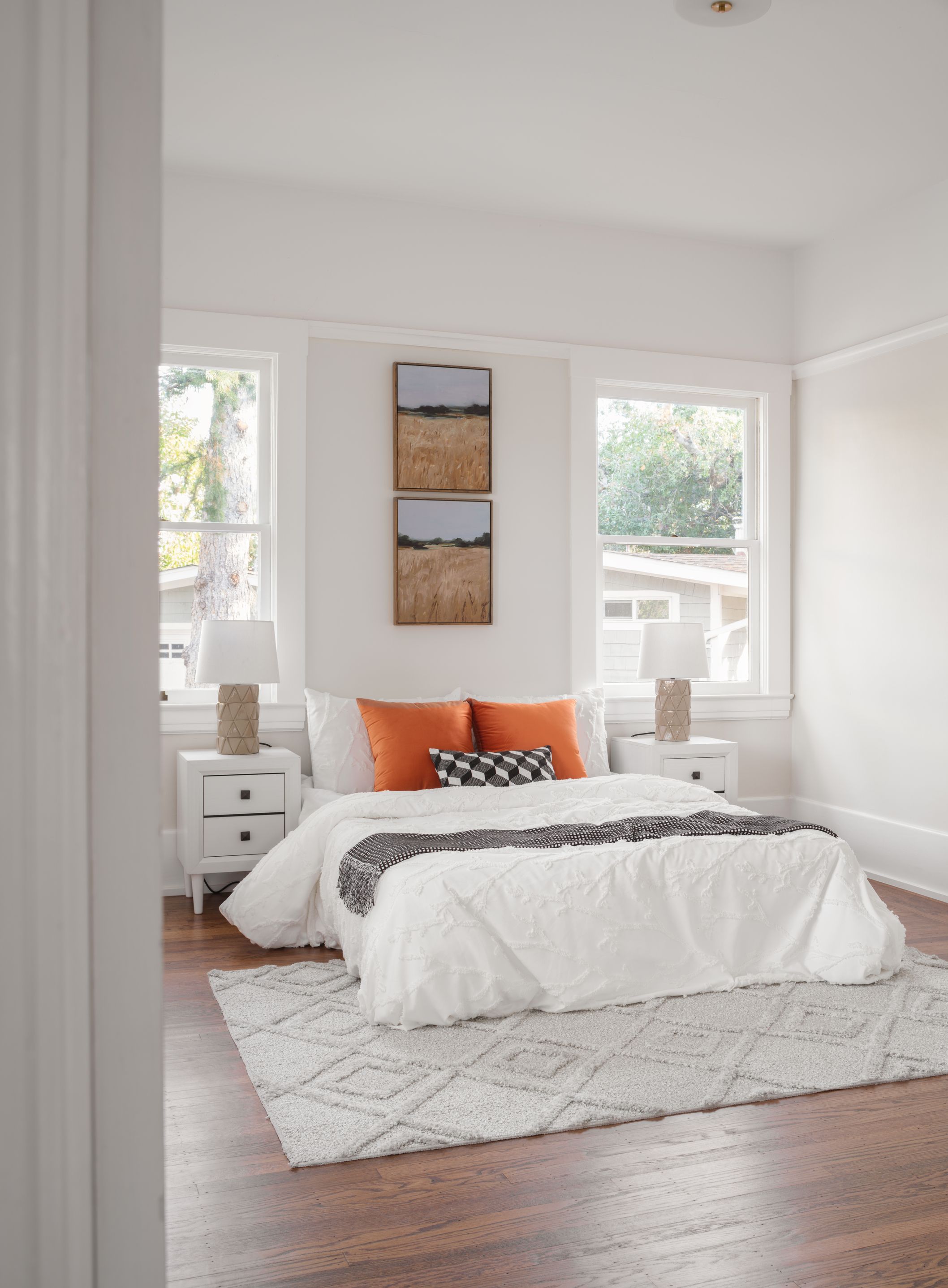
Staging a house while living in it shouldn't require dismantling your bedroom every morning. Keep the bed and essential clothing storage when they fit. Start by removing the exercise equipment, stacked laundry, and extra chair that has become a shelf.
Check the approach to the bed and access to closet doors. If a dresser blocks the route, try another wall before moving it out. Don't remove storage you need unless you've arranged a practical alternative; otherwise, its contents will simply land on another visible surface.
Use clean bedding with a readable outline: a smooth cover, sleeping pillows, and a restrained layer of texture. You don't need a pile of decorative cushions to communicate comfort. Open window coverings where privacy allows, and replace visibly damaged or mismatched bedside shades if they distract from the room.
Children's rooms can remain children's rooms. Keep familiar bedding and a manageable selection of toys, then store the overflow outside the visible play area. Use accessible bins for quick cleanup. Secure medications, jewelry, personal documents, and other sensitive belongings before visitors enter; bedside drawers aren't secure storage.
Bathrooms: edit the counter, address the actual condition
Bathrooms reveal their condition quickly under bright light. Clear the vanity, clean the mirror, and inspect the shower before buying towels. Staging shouldn't conceal leaks, damaged surfaces, or moisture concerns; arrange appropriate assessment or repairs rather than covering them with accessories.
Keep practical storage that fits without crowding the floor. Store duplicate products, spare packaging, and decorative containers that occupy counter space without helping daily use. A washable caddy lets you move everyday toiletries into a designated cabinet before showings and retrieve them afterward.
Replace a worn shower curtain or frayed towels when cleaning won't address their appearance. Choose simple fabrics that sit quietly beside the existing tile. Coordinate the visible finishes rather than trying to disguise an older bathroom with an unrelated collection of new accessories.
Check ventilation and follow up on persistent odors instead of masking them. Dry the sink and shower surfaces before leaving, empty the wastebasket, and put away damp bathmats. Keep necessary accessibility equipment in place. The room still needs to serve the people who live there.
Flex rooms and rentals: give each addition a job
A spare room containing a desk, treadmill, guest bed, and storage boxes asks buyers to sort out its purpose. Choose the main use that suits the room and your household. Keep the furniture that supports it, and store competing pieces where practical.
For an office, a clear desktop and an accessible chair usually explain more than shelves packed with equipment. Position the desk so window light reaches the work area without blocking access. Hide loose cables safely, and remove confidential paperwork before photography and showings.
Consider selective staging rentals only after this editing pass. Write down the problem each proposed piece will solve: a dining table that overwhelms the room, missing seating that leaves the layout unclear, or a bulky desk that prevents the door from opening fully. If there's no identifiable problem, skip the addition.
Mia's Home Staging, founded by Mia Wang, offers physical staging and consulting in the Bay Area. Explore our staging and consulting services to understand those options. For any proposed rental plan, confirm occupied-home availability, everyday-use rules, care requirements, delivery access, and removal arrangements before booking.
Your occupied home staging checklist for showings
Build the reset around a repeatable walk from the entry through the home. Keep cleaning supplies together and assign everyday belongings a real storage location. A plan that depends on hiding everything in the nearest closet will become difficult to maintain.
Entry and living areas: clear walking routes, put away shoes and bags, straighten seating, and remove mail. Open window coverings where appropriate, switch on the lights needed for dim areas, and check that cords and rug edges don't create obstacles.
Kitchen, bedrooms, and bathrooms: clear food preparation surfaces, wash or put away dishes, smooth bedding, contain laundry, and return toiletries to their caddy. Empty wastebaskets, dry wet surfaces, and check for cooking or pet odors. Secure valuables, medications, and private information.
Finally, follow the showing plan you've agreed on with your agent, including arrangements for pets. Walk back to the front door and look through the rooms from a visitor's height. You should see usable surfaces, clear paths, and daylight where the home allows it, without erasing everything your household needs.
Frequently Asked Questions
- Can I stage my home while still living in it?
- Yes. Occupied staging starts with your existing furniture and daily routines, then adjusts the layout, removes distracting belongings, and considers additions where needed. Keep essential furniture and accessibility equipment, and create a repeatable reset for showings.
- Do I need to replace my furniture before listing?
- Not automatically. Keep furniture that fits the room, functions properly, and looks cared for. Try rearranging and removing redundant pieces first. Consider a replacement when size, condition, or a missing function remains a problem.
- Can I use staging rental furniture while living at home?
- Ask the staging provider before booking. Confirm whether the proposed pieces are available for occupied homes, whether everyday use is permitted, and what care and removal requirements apply. Don't assume every rental plan allows household use.
- What should I put away before a showing?
- Clear walking routes and work surfaces, contain laundry, and put away toiletries, mail, and loose personal belongings. Secure valuables, medications, and private documents separately. Keep necessary accessibility equipment available.


