How to Warm Up a Room With Gray Floors
Keep the flooring. Use warm-white upholstery, wood, and coordinated color to prepare your rooms for sale.
How to Warm Up a Room With Gray Floors
Keep the flooring. Use warm-white upholstery, wood, and coordinated color to prepare your rooms for sale.
Keep the floor. Change what sits beside it.
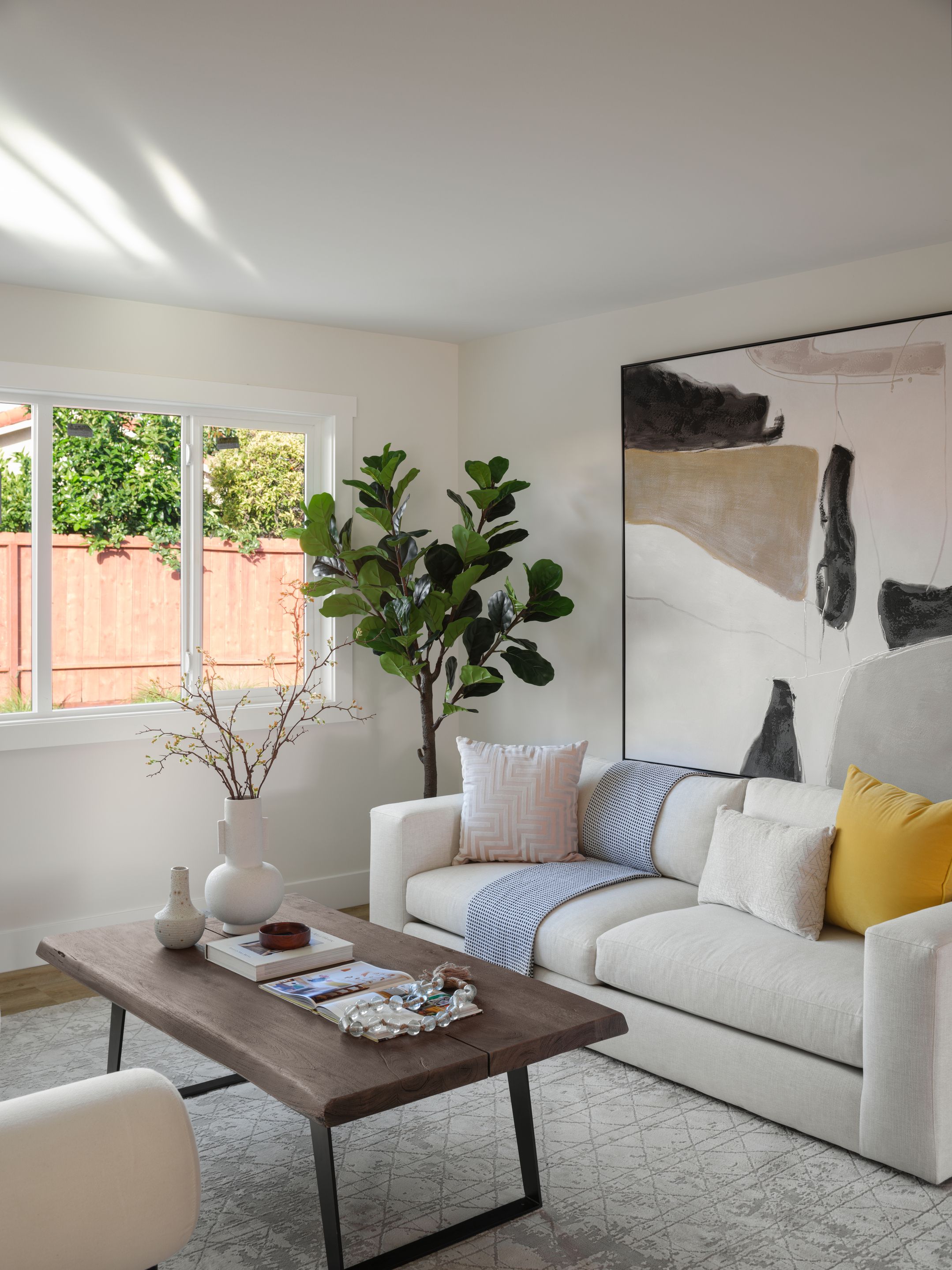
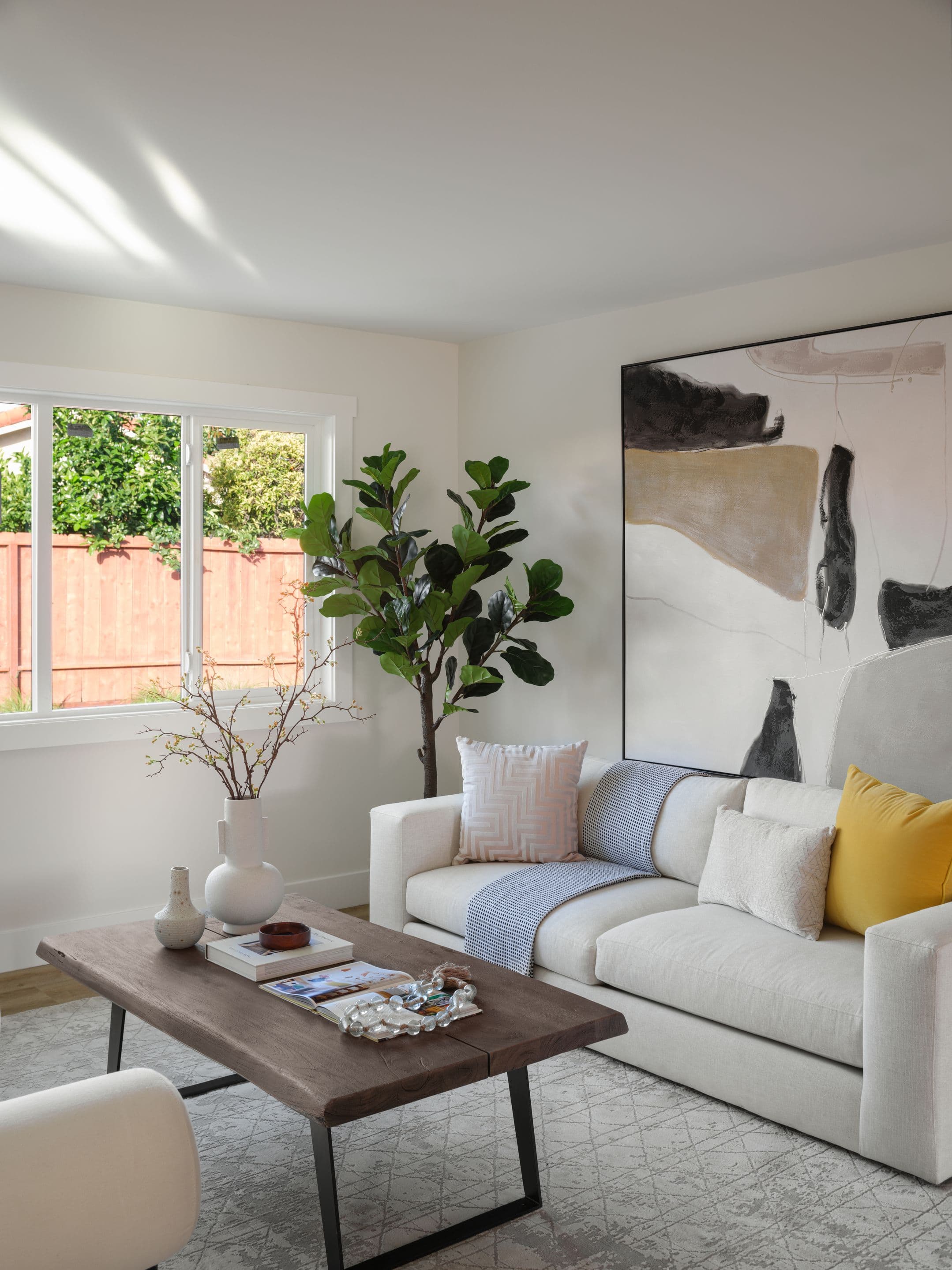
The gray floor looked quiet when the room was empty. Now, beside a charcoal sofa and a glass coffee table, it reads almost blue. If you’re deciding how to warm up a room with gray floors before selling, start with those relationships, not a flooring estimate. The same surface can look quite different beside ivory fabric, a textured rug, and wood with a mellow brown grain.
Our position is simple: gray flooring alone isn’t a reason to renovate before listing. If the floor is sound and presentable, treat its color as a fixed backdrop. Separate actual repair needs from styling decisions, then concentrate on the furniture, textiles, and light that buyers will see around it.
This doesn’t mean scattering orange pillows across an otherwise cool room. Warmth needs a connected plan. A warm-white sofa establishes a lighter center; wood introduces grain; a rug softens the broad gray plane beneath the seating. Restrained accents finish the composition rather than carrying the whole job.
Before buying anything, gather the pieces you already own. An ivory coverlet, a wood side table, or an oatmeal chair may belong in the room you’re preparing. Moving an existing piece can be more useful than adding another accessory.
Gray flooring alone isn’t a reason to renovate before listing.
Read the undertone before choosing your palette
Look at the floor beside plain white paper in daylight. Does the gray lean toward blue, or does it carry a beige-brown cast? That underlying color is its undertone. Blue-gray generally reads cooler; greige, a blend of gray and beige, already contains some warmth. Check near the window and farther inside the room, where shadows can change your impression.
Next, bring fabric and rug samples down to floor level. Don’t judge them only on a screen or held against a wall. A cream fabric that looks gentle in your hand may turn distinctly yellow beside a cool plank. A pale taupe can appear pink. You’re looking for a comfortable relationship, not an exact match.
For blue-gray flooring, begin with restrained warm whites, oatmeal, and wood that isn’t strongly orange. For greige, test flax, mushroom, and muted green. These are starting points rather than rules; the walls, cabinetry, and daylight also influence which colors that go with gray floors will work in your particular room.
Repeat the check with the lights on later in the day. If a combination works only in bright window light, keep testing. Choose the palette that holds together across the room’s normal lighting conditions, then carry its main materials through the seating area.
Palette A: warm white, natural oak, and muted clay
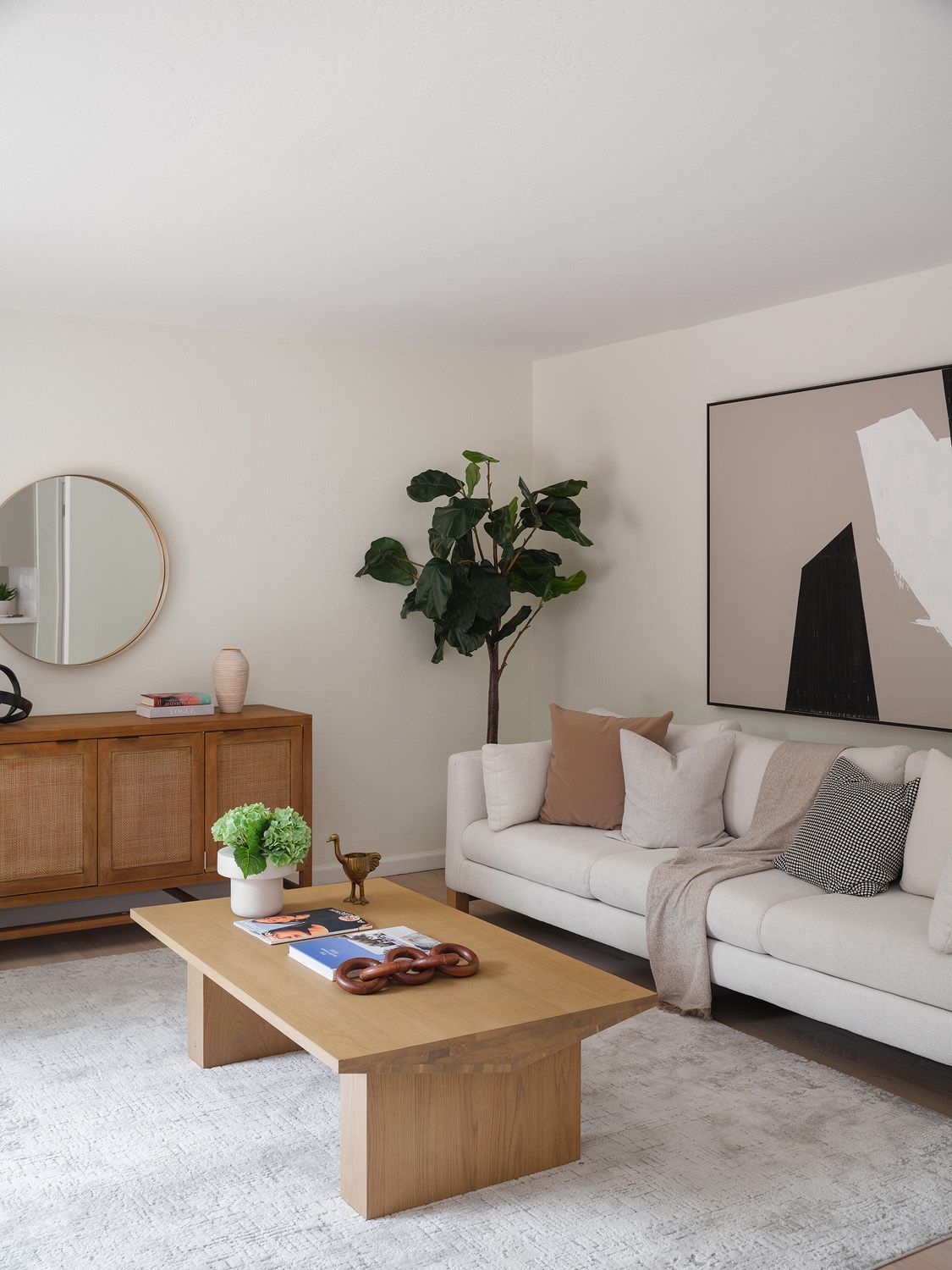
For blue-gray floors, start here. Pair a warm-white sofa with a natural oak coffee table and an ivory rug containing fine taupe threads. Add muted clay through a pillow or a low ceramic bowl. The pale upholstery lifts the seating area, while the oak grain and earthy accent keep the floor from setting the entire room’s temperature.
Choose oak by its actual finish, not its label. A clear, mellow finish can sit comfortably beside blue-gray; a strongly orange stain may exaggerate the contrast. Bring a wood sample into the room if you’re purchasing furniture. If you already own a suitable table, let that piece establish the wood tone instead.
Keep the clay dusty rather than bright. Think of an unglazed planter, not a vivid orange cushion. Repeat that color lightly, with different textures rather than a matching accessory set. A woven pillow and matte pottery can relate without making the room feel assembled from a single display.
For a seller working with a dark sofa, borrow the same material relationships instead of forcing a replacement. Put the ivory-and-taupe rug beneath the seating, introduce an oatmeal chair if space allows, and use oak where the furniture needs changing. Leave enough gray floor exposed to show how the palette connects to it.
Palette B: warm white, walnut, and mushroom
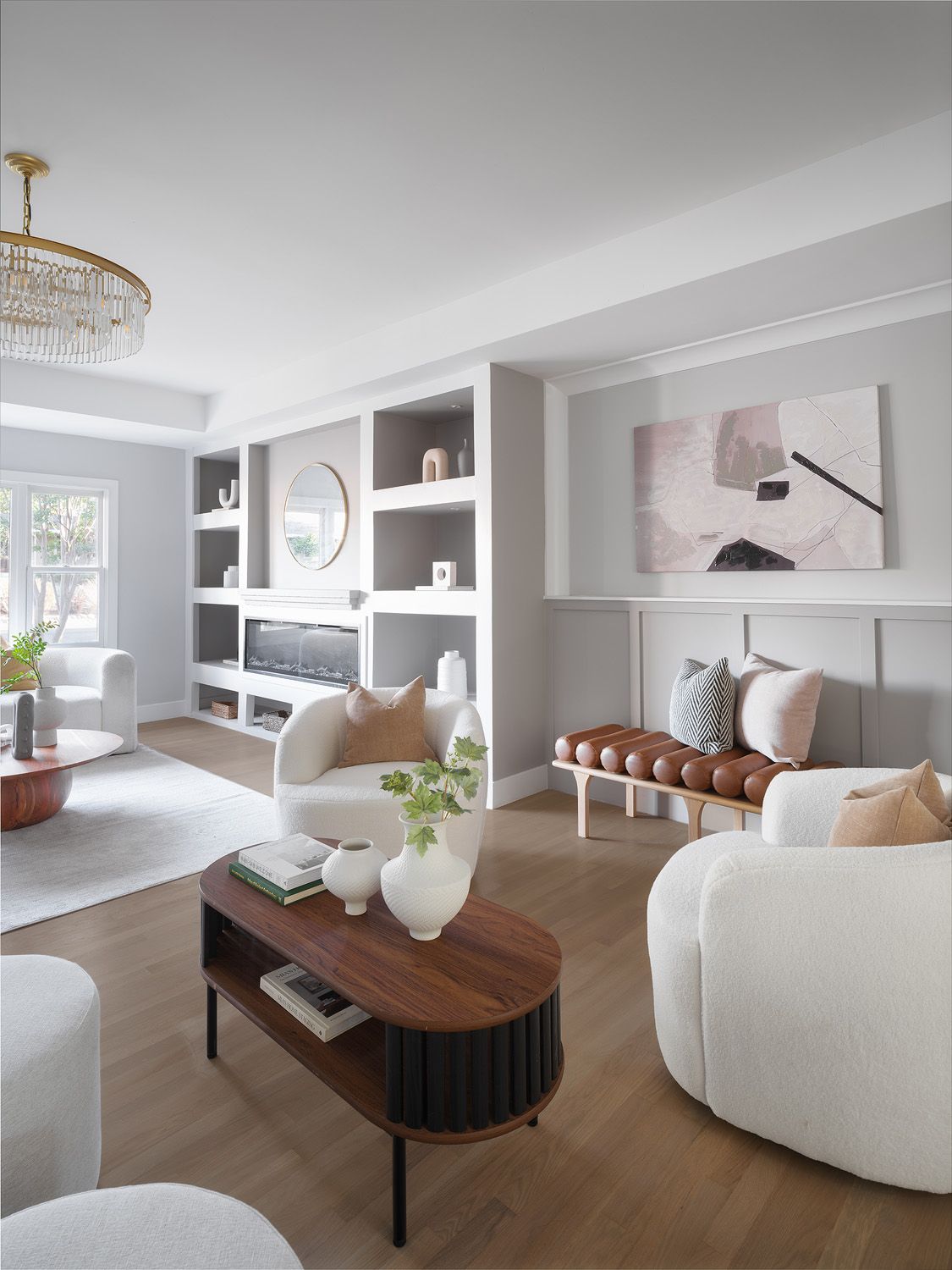
Choose this palette when the room needs depth rather than more color. Warm-white upholstery, a walnut table, and a mushroom rug create a warm neutral living room without relying on yellow or orange. Mushroom sits between beige and gray; select a version with a brown undertone that looks calm against your flooring.
Walnut supplies the contrast. Its darker grain gives the eye a clear place to settle among pale fabric and gray boards. Use it for a coffee table or a slim console, then leave some space around that piece. Several heavy, dark cabinets can make a compact room feel crowded even when their color works.
This palette can suit either blue-gray or greige floors, but the rug deserves careful testing. Against blue-gray, avoid mushroom shades that suddenly look mauve. Against greige, check that the rug remains distinct enough to define the seating area. A subtle woven pattern can create that separation without a sharp border.
Vary the surfaces so the quiet colors don’t fall flat. Try nubby upholstery, a closely woven rug, smooth wood, and a ceramic lamp with a fabric shade. If the room already has dark window frames or a metal fireplace surround, let those existing details provide the darkest accents. You don’t need to add more.
Palette C: warm white, light wood, and dusty olive
For greige floors, pair warm-white upholstery with light wood, a flax-colored rug, and dusty olive accents. The beige in the flooring connects with the flax, while the muted green introduces color without taking over. This combination works especially well when you want a soft, textured room rather than strong contrasts.
Start with the largest fabric surfaces. Put a warm-white sofa or coverlet beside the floor sample, then add the flax textile. Keep both from drifting too yellow. If the floor has a pinkish cast, test the olive carefully; the green may make that pink more noticeable instead of settling the room.
Use olive in a limited role: a woven cushion, a folded throw, or artwork with a subdued green passage. Let wood and upholstery do most of the warming. A crowded collection of plants and green accessories can pull attention away from the room’s windows, layout, and usable space.
In a bedroom, translate the same palette through warm-white bedding, light wood nightstands, and an olive cushion. A flax-toned rug can soften the gray beside the bed. You don’t have to repeat every item from the living room; repeat the material relationships so the home feels connected as buyers move through it.
Use rugs and lighting to connect the materials
The most useful rugs for gray floors contain a bridge between the floor and the furniture. Look for ivory mixed with taupe, oatmeal crossed with gray threads, or a faded pattern containing both warm and cool tones. A solid yellow-beige rug may create a harder divide than you expect.
Size matters as much as color. In a living room, choose a rug that reaches beneath the front legs of the main seating pieces, provided the layout allows it. A small rug floating beneath only the coffee table leaves the furniture disconnected and the gray flooring visually dominant. Keep walking routes clear and edges flat.
Then check the lamps. Mixed bulb colors can make warm-white fabric look cream at one end of the sofa and bluish at the other. Use a consistent warm-white light appearance in the room, within each fixture’s specifications, and evaluate it against the floor. Avoid pushing everything toward amber just to counteract gray.
A fabric lampshade softens the visible light source and adds another tactile surface. Open window coverings for daylight, but assess the room with its lamps on, too. The goal is a palette that makes sense in person, not one that depends on a heavily warmed photograph.
Edit the room before listing photos
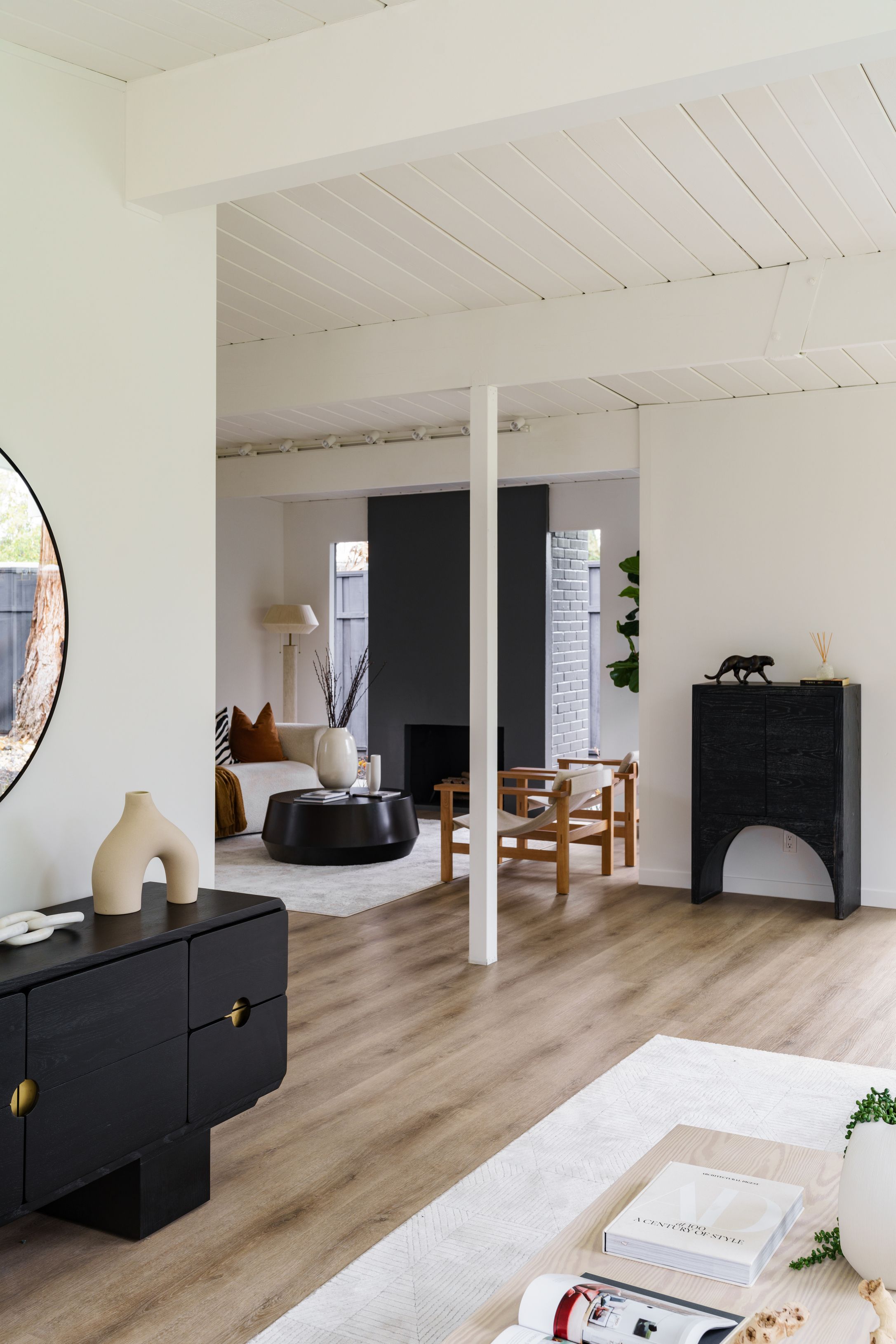
Stand at the doorway and take a straightforward phone photo. Look for the biggest interruptions: a charcoal throw across the ivory sofa, a small blue rug competing with the main rug, or an orange wood cabinet that feels separate from everything else. Remove or relocate those distractions before shopping for finishing touches.
Next, check what the room communicates about space. Can you see the route past the sofa? Does the chair crowd the window? Warm textures won’t compensate for furniture that blocks movement. Keep enough open floor visible to make the layout understandable, and avoid covering the gray simply because you dislike its color.
At Mia’s Home Staging, our Bay Area work includes physical staging and consulting. Physical staging uses furniture and accessories to prepare rooms for buyers; consulting helps you decide what to keep, move, or change. Explore our staging services for those options, or view our portfolio for examples of furniture scale and material combinations.
Finish with a coherent room, not a collection of warm-colored purchases. Once the upholstery, wood, rug, and light work together, gray flooring can remain in the background. That’s where it belongs while buyers take in the windows, the seating area, and the space they might use.
Frequently Asked Questions
- What colors help warm up blue-gray floors?
- Start with warm white, oatmeal, and taupe, then introduce natural wood and a restrained clay accent. Test fabrics beside the floor in daylight and lamplight; very yellow creams or orange wood finishes can exaggerate the floor’s blue undertone.
- What kind of rug works with gray floors?
- Look for a rug that combines warm and cool tones, such as ivory with taupe and gray threads. Choose a size that connects the seating pieces rather than sitting only beneath the coffee table, while keeping walking routes clear.
- Should I replace gray flooring before selling?
- Gray color alone isn’t a reason to replace flooring. If the floor is sound and presentable, first evaluate how upholstery, wood furniture, rugs, and lighting change the room. Assess damage and repair needs separately from color preferences.
- Can I warm up the room without replacing my gray sofa?
- Yes. Keep the sofa and introduce an ivory-and-taupe rug, wood furniture, and textured warm-white or oatmeal accents. Check the full combination against the flooring before purchasing, and avoid adding so many accessories that the seating looks crowded.


