Is your house not selling in the Bay Area?
A fall guide to deciding whether you need a price adjustment, better presentation, or both.

Is your house not selling in the Bay Area?
A fall guide to deciding whether you need a price adjustment, better presentation, or both.
Start with the evidence, not another throw pillow

The curtains are open. The sofa is straight. Your listing photos are online, but the showing calendar has gone quiet. If you’re searching “house not selling in the Bay Area,” you’re probably weighing two uncomfortable options: spend more preparing the house, or accept less for it.
Neither decision should start with guesswork. A stalled listing can reflect an asking price buyers won’t support, photographs that obscure the home’s strengths, an awkward furniture layout, or several problems at once. The job is to identify where interest drops away before choosing what to change.
Here’s our position: staging should make a defensible asking price easier to understand. It cannot make an unsupported price reasonable. A linen-covered chair can clarify a reading corner; it cannot cancel out a competing home’s additional bedroom, better condition, or lower price.
Before approving a price reduction or a furniture delivery, ask your agent to assemble recent comparable sales, current competing listings, showing activity, and recurring buyer feedback. Read them together. You’re looking for a consistent explanation, not the most reassuring comment from an open house. That distinction matters when you’re already managing cleaning, appointments, and the uncertainty of a move.
Staging should make a defensible asking price easier to understand. It cannot make an unsupported price reasonable.
Read the fall market without borrowing the wrong headline
The Bay Area fall housing market does not point every seller toward the same answer. According to C.A.R.’s August 2026 report, the regional median sale price for existing detached homes was $1,272,000, down 0.2% from a year earlier. Sales declined 4.2%. Those figures support a selective-market reading, not a claim of regionwide price collapse.
Supply also needs context. Unsold inventory increased to 2.6 months from 2.3 months in July, but remained below 2.9 months a year earlier. Median time on market was 22 days, unchanged from July and below 25 days last August. A quiet listing does not automatically mean the whole region has slowed.
Local patterns diverge. Redfin’s rolling three-month summaries ending August 2026 show Fremont’s median price down 7.4% year over year, while median days on market fell to 19 from 26. Palo Alto’s median rose 5.8%, with median days on market at 15 versus 14.
These datasets aren’t interchangeable: C.A.R. covers monthly detached-home sales; these Redfin summaries cover rolling periods and all home types. Changes in the mix of homes sold can also shift medians. Neither dataset tells you what buyers should pay for your particular shaded living room, updated kitchen, or narrow driveway.
Compare the homes buyers can actually choose

Ask your agent to build a comparison around your home’s property type, immediate area, size, condition, and relevant features. A nearby sale deserves less weight if its usable space, renovation quality, or location differs substantially. A bright, quiet rear bedroom and a bedroom facing traffic may look similar on a spreadsheet but feel different during a showing.
Separate closed sales from pending and active listings. Closed sales document completed transactions, though they reflect negotiations made earlier. Pending listings show where buyers recently committed, but the final sale price may not yet be available. Active listings show your competition, not proof that buyers will accept those asking prices.
Then examine the alternatives from the buyer’s side. At your asking price, can someone purchase a home with fewer repairs, more useful outdoor space, or a layout that needs less explanation? Ask your agent to account for concessions and meaningful condition differences when information is available. The headline price alone can hide important distinctions.
Financing adds pressure. Freddie Mac reported a national average 30-year fixed mortgage rate of 7.03% on September 24, 2026, up from 6.95% the prior week. That is a conforming-loan benchmark, not a Bay Area jumbo-loan quote. Still, it gives context for investigating affordability objections rather than dismissing them as bargaining.
Find where buyers stop moving forward
A quiet showing calendar and a busy open house with no offers are different problems. Ask your agent to review online activity where available, private showings, repeat visits, and offer conversations. Look for changes over time and comparisons with genuinely similar listings. A page view is not the same as a qualified buyer walking through the door.
If buyers see the listing but don’t schedule visits, audit the asking price, lead photograph, listing details, and access arrangements. A dark living-room image may discourage a visit; so can a price that compares poorly with nearby alternatives. Low activity alone cannot distinguish between them.
If buyers visit but don’t return, listen for repeated objections. “The dining area feels tight” may point to an oversized table. “We would need to replace the kitchen” describes a different financial commitment. “Too expensive” needs a follow-up: expensive compared with which home, and after allowing for what differences?
Record feedback in plain categories: price, condition, layout, presentation, and location. Ask whether comments recur across independent visitors. One person’s dislike of a textured rug is not a pricing strategy. Repeated concerns about repair costs deserve more attention. This gives you a working diagnosis rather than a collection of contradictory opinions.
Use a presentation reset when the price has support
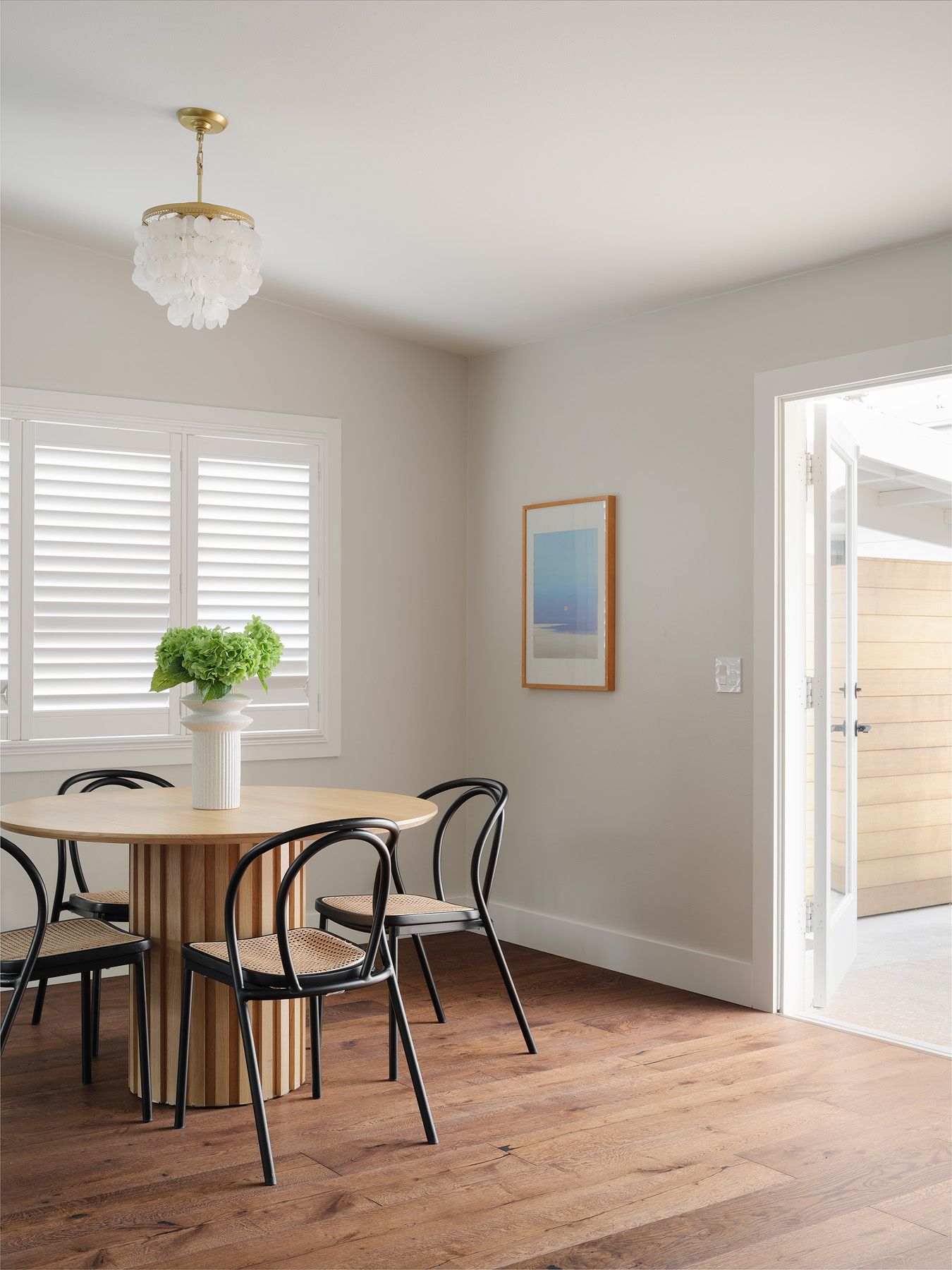
When comparable sales support the asking price, staging a stale listing can address problems buyers struggle to interpret. Physical staging means arranging furniture and accessories, often rented for vacant rooms, to show how the space functions. Consulting can help an occupied seller decide what to remove, reposition, or keep without replacing everything.
Begin with the buyer’s path through the home. Clear the entry sightline, move furniture away from door swings, and give ambiguous rooms a clear purpose. Scale matters more than accessory count. A bulky sectional can make an otherwise workable living room look like it has no walking space.
Consider an illustrative dining-room problem: chairs crowd the doorway, and buyers call the room small. A narrower table and less furniture may reveal a usable route through the room. That improves legibility; it does not add square footage. If the room remains too small for the buyer’s needs, styling won’t change that.
Next, address presentation at the camera level. Clean window glass, replace mismatched bulbs with consistent light color, and remove distracting countertop clutter. Photograph the actual changes, using accurate proportions and views that explain adjoining spaces. Fresh images should document a clearer home, not disguise condition.
When reviewing our staging portfolio, look beyond individual furniture pieces. Notice room function, furniture scale, and open sightlines. Those are useful questions to bring to your own listing assessment.
Choose a price adjustment when the comparison fails
A Bay Area home price reduction deserves serious consideration when better-value alternatives keep attracting buyers, completed sales don’t support your ask, or repeated feedback connects the price to substantial work. Your preparation costs and desired proceeds matter to your planning, but they don’t establish what another person will pay.
Reductions are not unusual. Redfin’s August San Jose dashboard reported 27.2% of homes with price drops, down 1.4 percentage points year over year. That does not prescribe a reduction for your home. It shows why neither “everyone is cutting” nor “a reduction means failure” is a useful starting point.
Ask your agent to explain the proposed new price through comparable transactions, current alternatives, and buyer search ranges. Avoid choosing a token reduction simply because it feels less painful. The change should address the evidence you’ve collected, not just produce a notification.
When price and presentation both miss the mark, coordinate them. Correct the crowded bedroom layout, photograph the clearer floor space, and align the marketing update with a defensible asking price. Otherwise, the lower price may continue circulating beside the same confusing images. Staging and pricing solve different problems; sometimes the listing needs both.
Set a review point before spending again

Before making changes, agree with your agent on what you’ll evaluate afterward and when. Use the pace of comparable local listings to set that review point rather than an arbitrary regional deadline. Record your starting activity so you can distinguish a meaningful change from a busier afternoon.
For a presentation-first test, watch qualified showings, repeat visits, offer discussions, and whether feedback about dark rooms or cramped pathways fades. For a price adjustment, ask whether the home now competes credibly with available alternatives. More traffic without stronger buyer interest may mean the original diagnosis was incomplete.
These are marketing tests, not promises of a particular sale price or selling time. The market reports cited here do not establish that staging prevents reductions. Stay willing to revise the plan when the evidence changes.
Mia’s Home Staging offers physical staging and consulting for Bay Area sellers. Our approach pairs design knowledge with restraint: furniture that explains the room, texture that reads clearly in photographs, and fewer objects competing for attention. The next step should address what buyers are missing, not add another layer of decoration.
Frequently Asked Questions
- Should I lower my asking price or refresh staging first?
- Start with comparable sales, current competing listings, showing activity, and recurring buyer feedback. If the asking price has support and buyers struggle to understand the rooms, consider a targeted presentation reset. If comparable properties offer better value, discuss a price adjustment with your agent. Some listings need both.
- Can staging compensate for an unrealistic asking price?
- No. Staging can clarify room function, furniture scale, and usable space, but it cannot change the home’s location, square footage, or repair needs. It should support a defensible price rather than substitute for one.
- Do I need new listing photographs after restaging?
- If staging meaningfully changes furniture placement, lighting, or room function, updated photographs help buyers see those improvements before visiting. Images should accurately represent the home and its proportions.
- How long should I test a presentation reset?
- Agree on a review point with your agent based on the pace of comparable local listings. Compare qualified showings, repeat visits, offer discussions, and buyer feedback with your starting activity rather than relying on a universal deadline.


