Home Staging for First Impressions: 3 Key Spaces
A practical guide to staging the exterior entry, foyer, and first room buyers experience.

Home Staging for First Impressions: 3 Key Spaces
A practical guide to staging the exterior entry, foyer, and first room buyers experience.
The Showing Starts Before the Front Door Opens
A buyer walks up the path, hears the latch click, and pauses while the agent opens the lockbox. In that short interval, they notice the faded doormat, the porch light, the dusty sidelight window, and whether the entrance feels cared for. Home staging for first impressions starts here, before anyone steps across the threshold.
That matters because buyers do not experience a home as a collection of listing features. They experience it as a sequence. The exterior entry sets a level of expectation. The foyer either confirms or interrupts it. Then the first visible room gives the house an identity: calm retreat, easy gathering place, or a floor plan that feels difficult to understand.
You do not need a new walkway, custom door, or major landscape project to improve that sequence. Most sellers need sharper editing, cleaner sightlines, and a few deliberate materials. Think dry stone underfoot, clear glass around the door, warm lamp light inside, and enough open floor area for two people to enter without turning sideways.
Edit the Exterior Entry Before You Decorate It
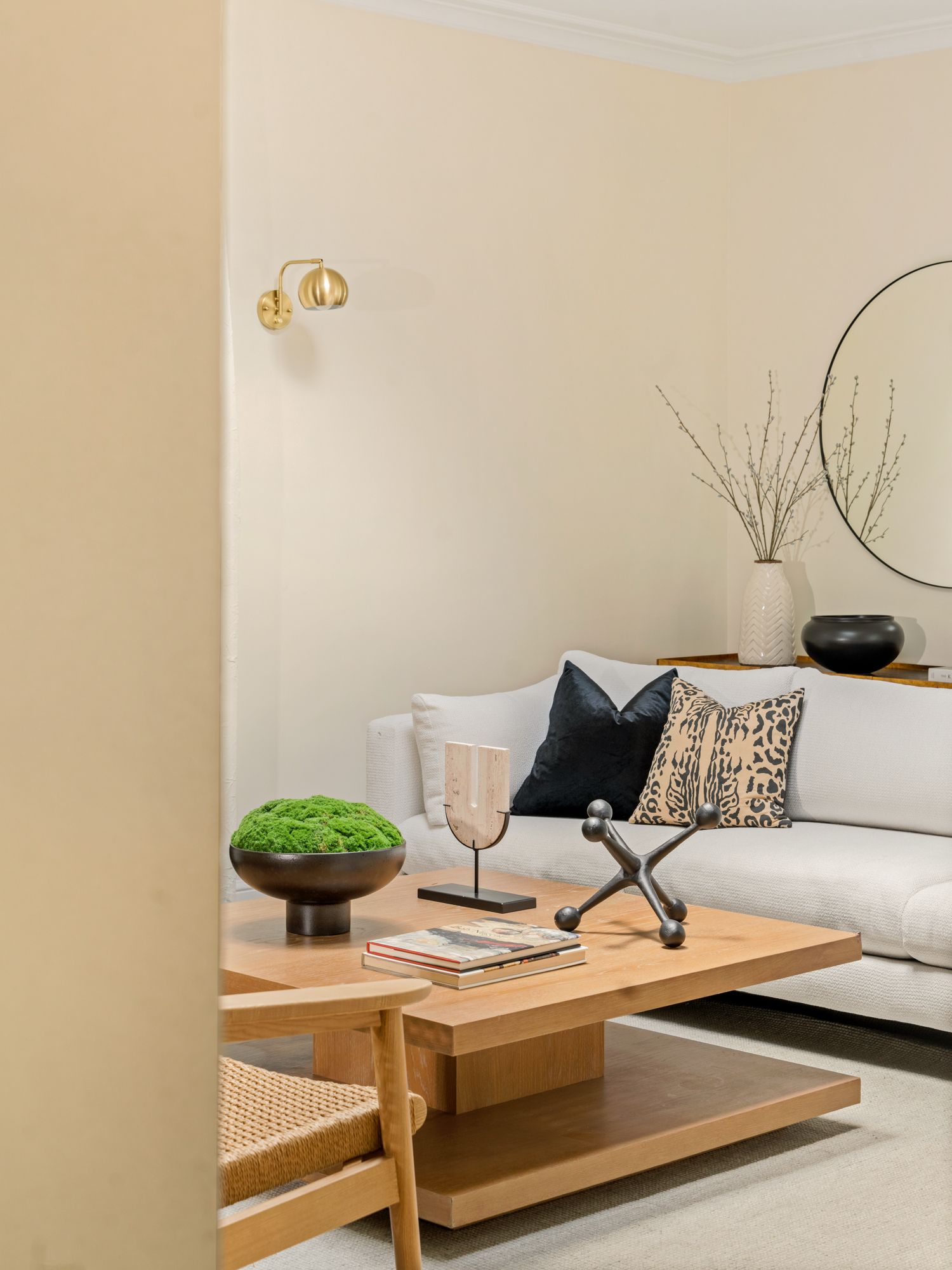
Effective curb appeal for home sellers begins with maintenance, not accessories. Sweep the path and porch. Remove cobwebs from the light fixture. Wash the door, handle, threshold, mailbox, and nearby windows. Trim plants that brush against a buyer’s coat or hide the house number. When the approach feels quiet and orderly, buyers can look at the architecture instead of the chores.
Next, check scale. A small landing rarely needs two planters, a bench, a sign, and layered mats. That arrangement may photograph as cheerful, but it can make the physical approach feel cramped. Use one clean doormat sized to the door and, if space allows, one substantial planter rather than several small pots. Choose foliage with a clear shape and remove any brittle leaves or exposed plastic nursery containers.
Treat the front door as part of the composition. Replace burned-out bulbs, confirm that the lock works smoothly, and clean paint where hands have left dark marks. During an evening showing, a warm porch light should illuminate the keyhole and the buyer’s face without producing a cold blue glare. The goal is not decoration. It is an entrance that feels easy to find, easy to open, and ready to receive someone.
The front entrance should communicate care before it communicates style.
Give the Foyer One Clear Job
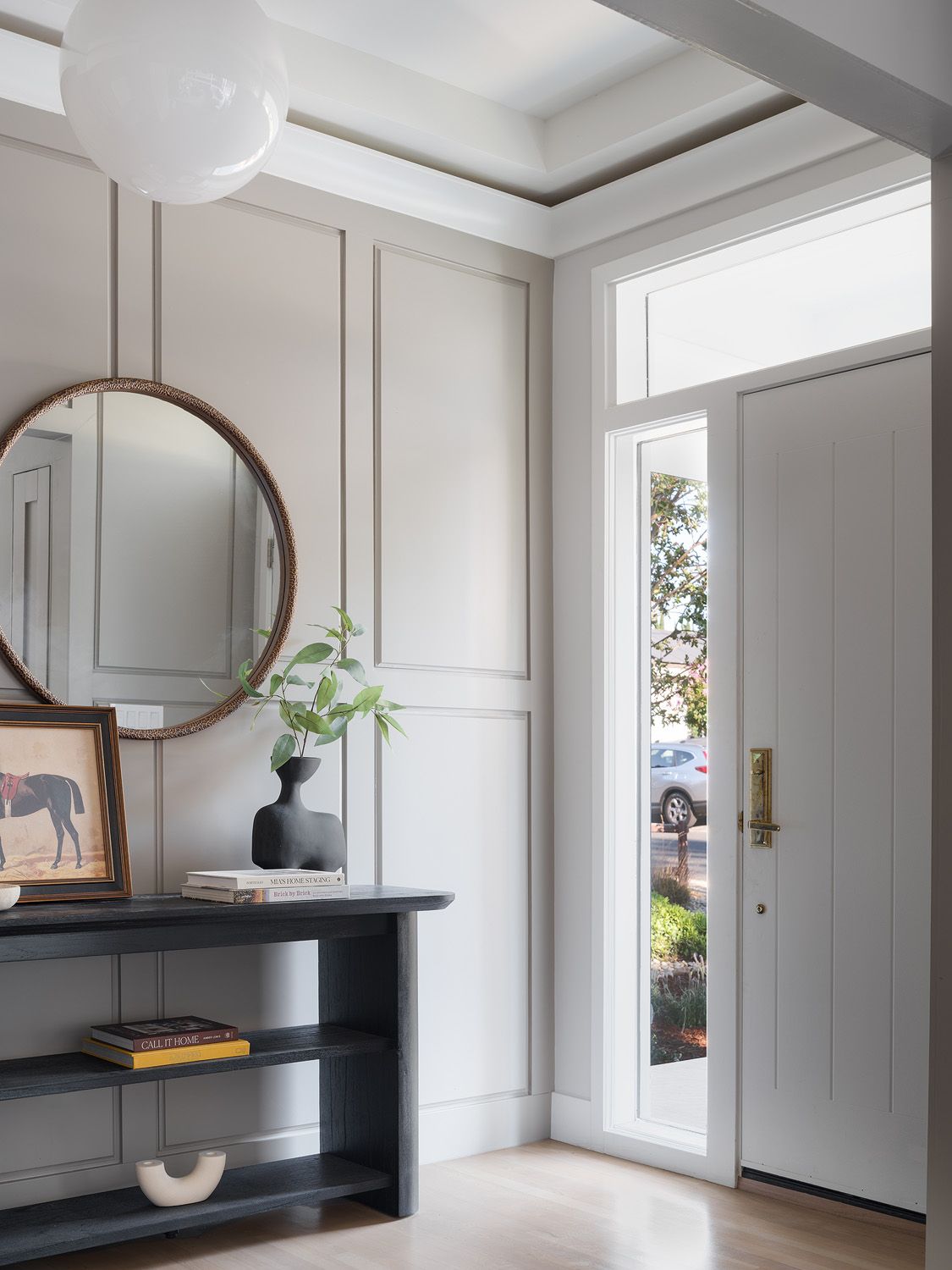
Once buyers enter, they need a moment to orient themselves. A foyer should provide that pause without becoming a storage zone or furniture display. Remove shoe racks, delivery boxes, extra baskets, pet leashes, and crowded coat hooks. If the door swings inward, open it fully and make sure it does not strike a chair, table, or planter.
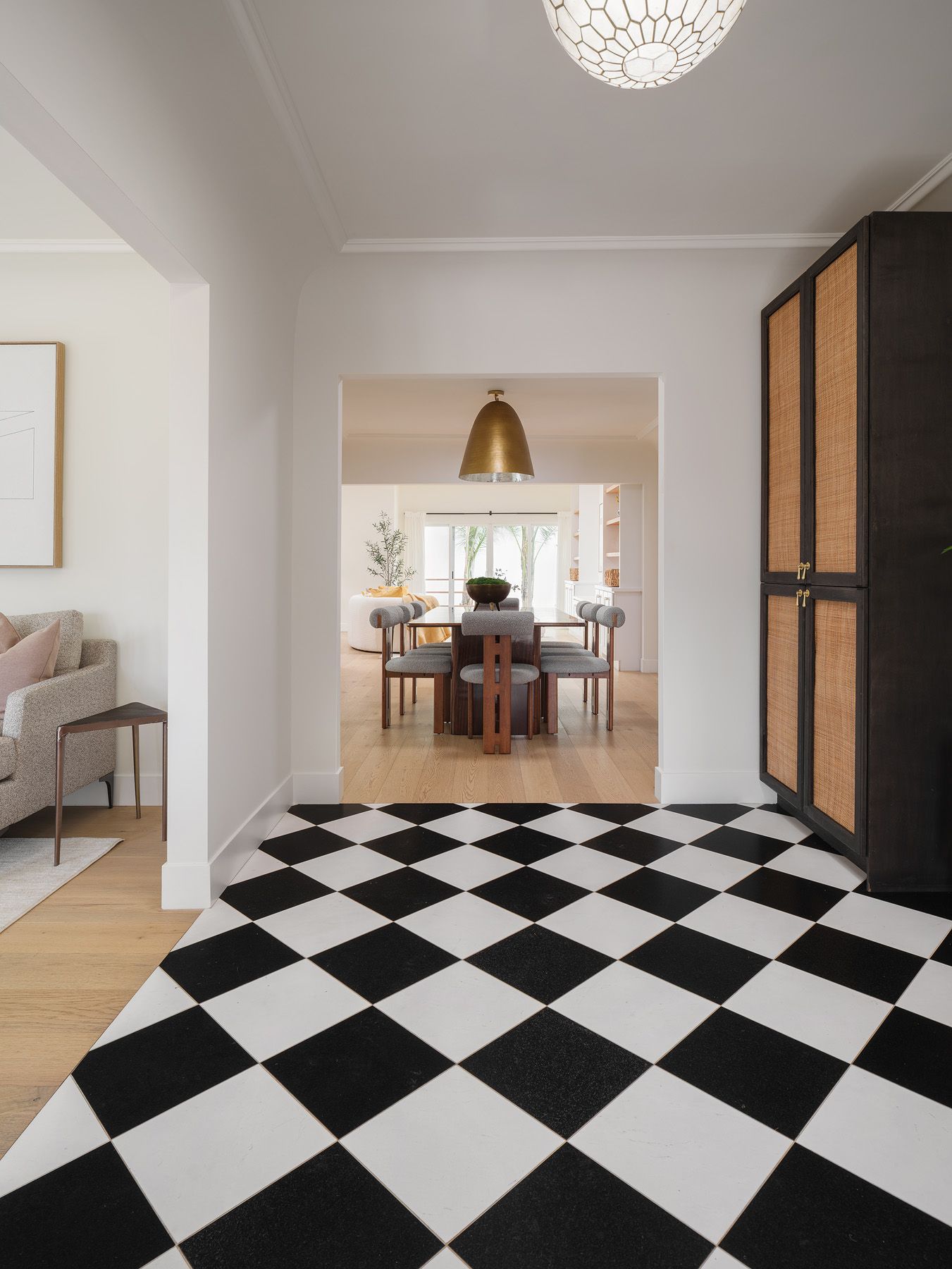
Then decide what the foyer needs. In a narrow entry, that may be only a runner and a framed piece of art. In a wider space, a shallow console can establish scale and create a useful visual stop. Keep the top restrained: a ceramic vessel, a small branch, or a lamp may be enough. Buyers should notice the grain of the console, the softness of the runner, and the route into the home, not a row of decorative objects.
A mirror can help when it reflects a window, a clean wall, or the glow of a nearby lamp. It works against you when it doubles a coat rack, utility door, or cluttered kitchen counter. Stand where a buyer will stand and inspect the reflection before hanging one. Good entryway staging ideas respond to the actual sightline rather than a generic list of foyer accessories.
Stage the Sightline, Not Just the Square Footage
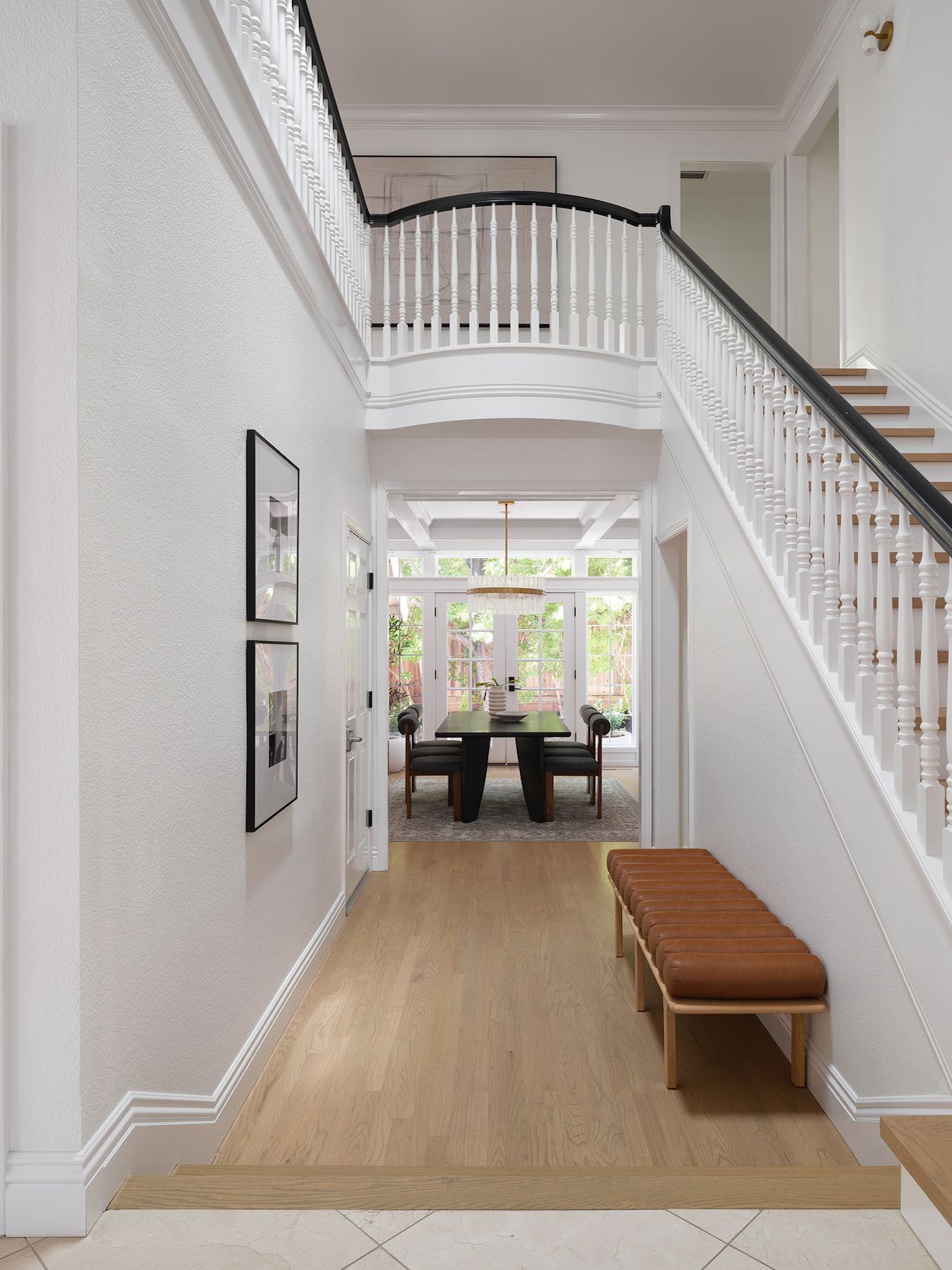
From the threshold, look straight ahead. Buyers may see a living room, dining room, staircase, hallway, or several spaces at once. That view becomes the home’s opening image, so identify its visual destination. A fireplace, broad window, artwork, or sculptural light fixture can provide a natural endpoint. Furniture should guide the eye toward it rather than cut across it.
Pay close attention to furniture backs. The back of a tall sofa near the entry can read like a barrier, especially when the upholstery is dark or the passage behind it is narrow. A lower-profile sofa, a slim console behind it, or a revised seating angle can make the same room feel more accessible. Leave a direct walking path with no pouf, plant stand, or side table forcing buyers to weave.
Light also connects the foyer to the room beyond. Open clean window coverings, replace mismatched bulbs, and turn on lamps in any dim corner before showings. Avoid mixing icy overhead light with amber table lamps in the same view. A consistent warm-white glow helps wood, linen, plaster, and painted walls read as part of one space rather than a series of disconnected zones.
Let the First Room Explain the Home
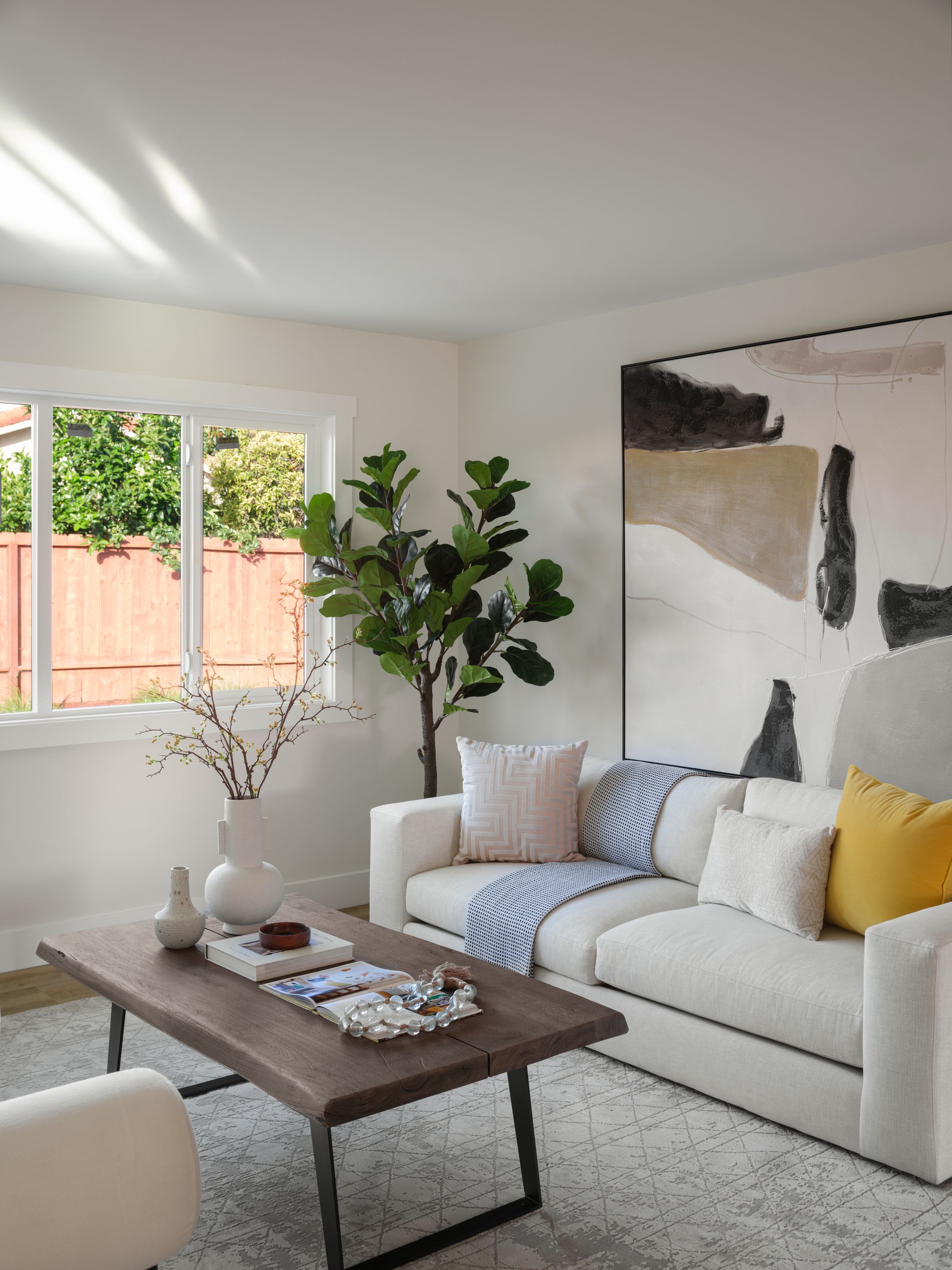
The first front-facing room should answer a practical question: how would someone live here? Sellers often leave this room caught between identities, with a desk against one wall, a dining table under a window, and an accent chair floating near the door. Buyers then have to solve the room while they are still forming an opinion of the house.
Choose one primary function based on the architecture and likely daily use. A room with a fireplace and broad street-facing windows may work best as a living room. A room beside the kitchen with a centered pendant may read more clearly as dining space. If the layout supports a home office, use a properly scaled desk, a comfortable chair, and a controlled background rather than folding furniture and visible cords.
Our precise opinion is this: the first room should communicate the home’s strongest everyday experience, not preserve a formal label that no longer fits. A relaxed seating group can show conversation and afternoon light. A round dining table can soften a square room and leave cleaner circulation. An office can demonstrate privacy if the door closes and the acoustics feel calm. Make the function legible in one glance.
The first room should explain how the home lives, not ask buyers to solve it.
Use Restraint to Create an Emotional Connection
Emotional connection does not require filling every surface. It grows from cues that feel specific enough to suggest daily life but open enough for buyers to imagine their own. In the foyer, that might be a linen runner and a single leafy branch. In the front room, it could be a reading lamp beside a chair, a tactile wool throw, and two books on a low table.
Remove personal photographs, name signs, collections, and strongly themed seasonal decor from the entry sequence. These items carry someone else’s story too loudly. Also reduce strong fragrance. A heavy candle or plug-in scent can make buyers wonder what it covers. Clean air, freshly washed textiles, and a subtle sense of wood or greenery feel more credible.
Color should connect the three spaces without making them identical. Repeat one or two quiet notes, such as black metal, warm oak, or muted olive, from the porch through the foyer and into the front room. That repetition creates continuity when the buyer’s eye moves from the matte door hardware to a slim lamp and then to the frame of a chair. For examples of this kind of visual editing, browse our Bay Area staging portfolio.
Do a Buyer’s-Eye Walkthrough Before Photography
When the setup is finished, step outside and approach the property as if you have never seen it. Pause at the curb, the gate, the front step, and the open door. Notice what enters your field of view first. Listen for a dragging gate, rattling vent, or squeaking hinge. Feel whether the path narrows around an overgrown shrub or whether the foyer rug catches under the door.
Take phone photos from each pause point. A photograph flattens the scene and often exposes issues your eye has learned to ignore: a tilted planter, tangled cord, dark doorway, undersized rug, or chair blocking the window. Check the listing photographer’s likely doorway angle as well. The first room should retain a clear focal point when viewed through the foyer, not only when you stand inside it.
Finally, keep the plan realistic for showing days. Choose plants that will hold their shape, surfaces that can be reset quickly, and textiles that will not slide every time the door opens. Mia’s Home Staging provides both physical staging and design consulting, so sellers can get support whether a vacant property needs furnishings or an occupied home needs a focused edit. The aim stays the same: make arrival feel clear, calm, and considered.
Frequently Asked Questions
- What should I stage first at my front entrance?
- Start with cleaning and maintenance: sweep the path, wash the door and nearby glass, remove cobwebs, trim obstructive plants, and confirm that the light and lock work. Then add only what the landing can comfortably hold, such as a properly sized doormat and one substantial planter.
- Does every foyer need a console table?
- Not necessarily. A narrow foyer may need only a runner, artwork, and clear circulation. If you use a console, choose a shallow piece that does not interfere with the door swing or walking path.
- How should I stage the first room buyers see?
- Choose one primary function that fits the room’s architecture and relationship to nearby spaces. Use furniture with a clear purpose, preserve an open route from the entrance, and create a focal point that buyers can understand from the doorway.
- Can an occupied home benefit from entryway staging?
- Yes. A staging consultation can identify what to remove, reposition, or supplement using the seller’s existing furniture. Physical staging is more appropriate when a vacant room needs furnishings to communicate scale and function.


