Dining Room Rug Size: A Seller’s Guide
How to size a rug, keep chairs moving freely, and decide when bare hardwood shows your room better.

Dining Room Rug Size: A Seller’s Guide
How to size a rug, keep chairs moving freely, and decide when bare hardwood shows your room better.
Start with the chair, not the rug swatch

Pull a dining chair away from the table. If its back legs drop off the rug while its front legs stay on, the room has a proportion problem that a new centerpiece won’t solve. Choosing a dining room rug size starts with that ordinary movement, not with a color palette.
For a Bay Area homeowner preparing to list, the rug has a specific job: make the dining arrangement easy to understand without interrupting the room’s sense of space. It should frame the table and chairs as a usable group. It shouldn’t look like a small fabric island beneath the table legs.
Our position is straightforward: bare hardwood presents better than a dining rug that cannot accommodate chairs in use. A visible stretch of oak or maple can give the eye a clear path through the room. An undersized rectangle introduces another boundary precisely where you want the space to feel open.
That doesn’t mean every dining room should lose its rug. A well-proportioned rug can soften chair noise, add texture beneath a simple table, and distinguish dining from lounging in an open layout. The decision comes down to fit, movement, and what the floor contributes to the presentation.
Bare hardwood presents better than a dining rug that cannot accommodate chairs in use.
Measure the tabletop, then add room for movement
Measure the tabletop’s length and width before you browse. Use the table configuration you’ll actually show: if you plan to remove an extension leaf for listing photos and showings, measure without it. Then look beyond the tabletop. The rug needs to support the chairs when someone pulls them back to sit.
As a practical starting point, allow roughly 24 to 30 inches of rug beyond each table edge. Treat that range as a planning guide, not a guarantee. Deep chairs, angled legs, and the way people move around your table can require more room. The physical chair test matters more than the label on a rug.
Here’s an illustrative calculation: a tabletop measuring 72 by 40 inches becomes a 120-by-88-inch footprint when you add 24 inches on every side. An 8-by-10-foot rug measures 96 by 120 inches, so it accommodates that starting footprint when its long edge follows the table’s length.
Notice what the arithmetic doesn’t tell you: whether the rug fits beside your sideboard, whether a door catches its edge, or whether the chairs still slip off when pulled back. When comparing rug size under dining table arrangements, measure the furniture first, then test the resulting rectangle against the actual room.
Test chair clearance and the route around the table

Mark the proposed rug corners with a floor-safe method approved for your flooring. Arrange the chairs as you intend to show them, then sit down and stand up normally. Watch the back legs. They should remain supported rather than catching an edge or tipping between a soft rug and a hard floor.
Next, leave a chair pulled out and walk behind it. Try the route from the kitchen, the doorway, and the adjacent living area. A rug can fit the table beautifully on paper while the whole arrangement still blocks everyday movement. Chair clearance and walking space are related, but they aren’t the same measurement.
Open nearby cabinet doors, too. A thick rug or pad can interfere with a low sideboard door, and a corner placed in a busy passage can curl or catch a shoe. Keep the surface flat, and use a pad compatible with both the rug and your flooring manufacturer’s guidance.
If the arrangement feels tight, don’t solve it by shrinking the rug until the chairs spill off. Reconsider the table’s listing configuration, remove unnecessary furniture, or skip the rug. Your goal isn’t to squeeze every object into the photograph. It’s to show a dining area where a visitor can move without negotiating obstacles.
Match the rug’s outline to the room’s sightlines

Stand at the entrance rather than beside the table. From there, you can see how the rug divides the floor. A small, dark rug surrounded by pale hardwood creates a strong visual boundary; a quieter tone with enough chair clearance can make the dining arrangement feel less fragmented.
Rectangular tables generally work comfortably with rectangular rugs because the outlines follow each other. A round table can work with a round or square rug, depending on the room. Don’t choose a round rug solely because the tabletop is round; check whether it leaves enough usable surface behind every chair.
In an open-plan space, use the rug to identify the dining area without pushing its edge into the neighboring seating arrangement. Look at the exposed floor between those zones. A narrow, awkward sliver can make the layout feel crowded even when neither furniture group seems especially large on its own.
Center the rug beneath the table rather than automatically centering it within the room. A sideboard may make the usable dining area asymmetrical. Look at the table, light fixture, and rug together, but don’t sacrifice a clear walking route just to force every element onto the same line. Proportion should support use, not override it.
Choose a surface that lets chairs slide
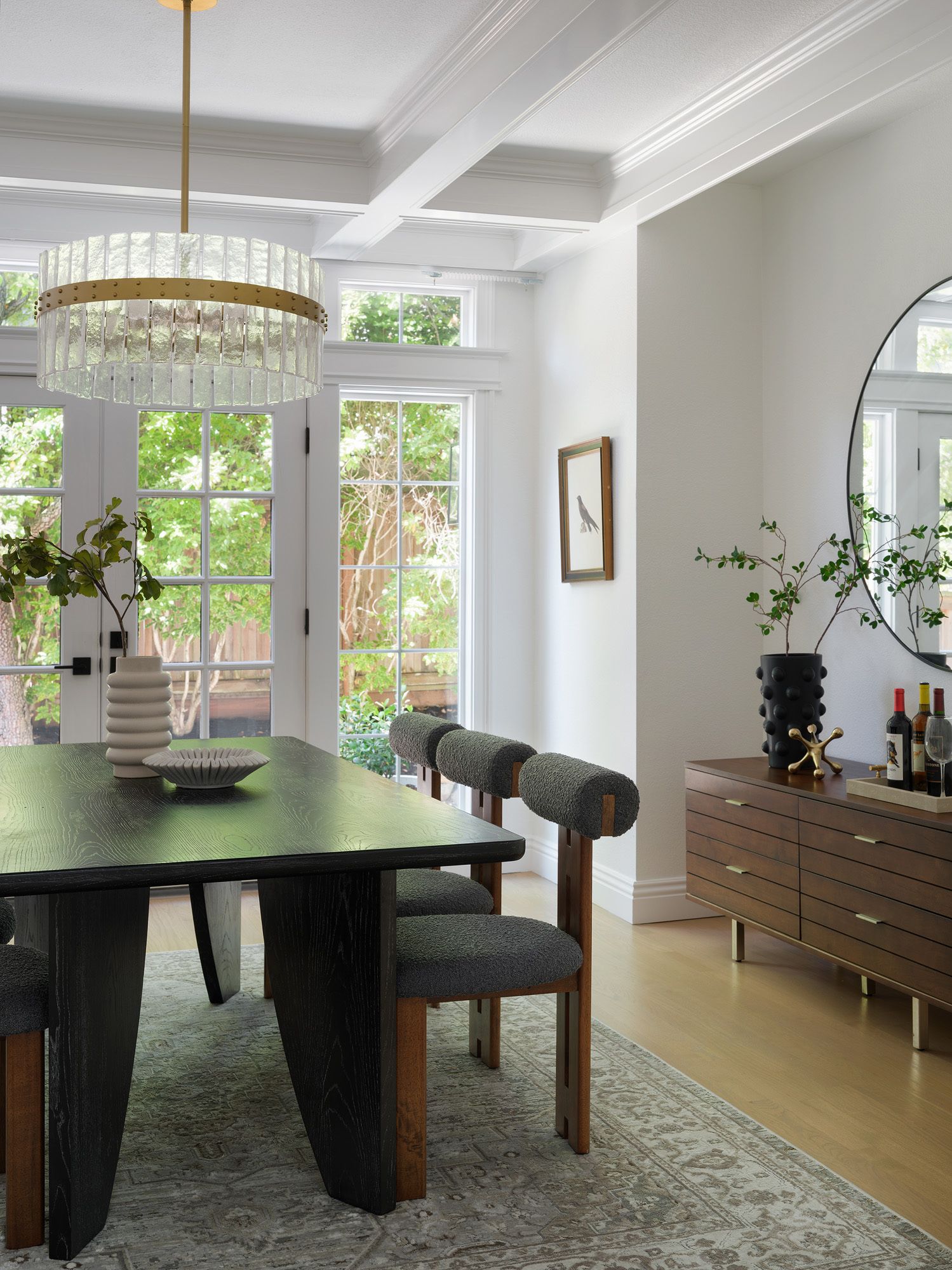
For listing preparation, the best rug for dining room use is often the one that stays visually quiet and behaves well beneath chair legs. Look for a low-pile surface, meaning short fibers rather than a deep, plush texture. A stable flatweave can also work, provided its edges lie flat and the chairs move smoothly.
Run your hand across the sample, then consider the chair feet. A coarse weave may feel textured and interesting but catch narrow legs. Deep pile can resist movement and retain visible tracks. Fringe can bunch near a passage. Evaluate the combination you own rather than assuming a material name guarantees easy use.
Muted patterns and subtle tonal variation can add texture without competing with the table. Consider oatmeal, warm gray, or a restrained earth tone in relation to the actual floor and upholstery. Bring a sample into the room if possible; window light may reveal a pink or yellow cast that wasn’t apparent online.
Read the cleaning instructions before buying, especially if you’ll continue eating in the room while the home is listed. Washability doesn’t tell you whether a rug fits your equipment or dries easily. For an existing rug, address stains and lingering odors before photography. Skip scented sprays that add fragrance without removing the source.
Let bare hardwood compete fairly
Remove the rug temporarily and look again from the doorway. If daylight travels across continuous wood grain and the table still clearly defines the dining area, the floor may already be doing enough. You don’t need another layer simply because dining rooms in decorating photographs often include one.
Bare flooring deserves particular consideration when a correctly sized rug would crowd a passage, overlap a neighboring furniture zone, or leave awkward strips along the walls. Among dining room staging ideas, subtraction is easy to overlook. It can make the arrangement simpler without requiring another purchase or delivery before photography.
Inspect the exposed floor before committing. Clean it with a product suitable for the finish, check for discoloration beneath the old rug, and address maintenance concerns appropriately. Don’t position a rug to conceal damage that buyers should understand; staging supports presentation, not concealment. Ask your real estate professional about disclosure questions.
Then listen. Without a rug, chair movement and conversation may sound sharper. Compatible felt protectors can reduce scraping, while existing curtains and upholstered chairs may provide some softness. Compare the visual and acoustic tradeoffs in your own room. The cleaner presentation may be bare wood, but it should still feel usable when someone steps inside.
Make the final decision from the listing-photo view

Before buying or replacing anything, take simple phone photos from the doorway and adjoining room. Compare the current arrangement with the rug removed, using similar daylight and camera positions. Avoid an exaggerated wide-angle setting. You’re checking the relationship between furniture and floor, not trying to stretch the room on screen.
Look for specific distractions: a rug edge cutting beneath chair legs, a bold border dominating the foreground, or a corner extending into the walking route. Then check the successful parts. Can you see the table’s shape? Does the floor provide breathing room around the dining group? Does the texture stay secondary to the space?
For visual context, browse Mia’s Home Staging portfolio and study how furniture groupings relate to exposed floor. At Mia’s Home Staging, founded by Mia Wang, we offer both physical staging and consulting. Physical staging uses rented furnishings to show how rooms can function; consulting helps you assess what to keep, move, or remove.
You don’t need to resolve every design choice by ordering something new. Sometimes the useful next step is a proportion check before photography. Explore our home staging services if you need help deciding whether your dining room needs a different rug, a revised furniture arrangement, or a clear stretch of hardwood.
Frequently Asked Questions
- How far should a dining rug extend beyond the table?
- A practical starting point is roughly 24 to 30 inches beyond each table edge. Chair depth and movement can require more space, so test the arrangement with someone sitting down and standing up. The chair legs should remain supported by the rug during normal use.
- Should I use a rug under a dining table when selling?
- Use a rug when it accommodates the chairs, leaves walking routes clear, and helps define the dining area. Leave the floor bare when the rug crowds the layout or interrupts an otherwise clear view of well-maintained hardwood.
- Is a low-pile rug better for dining chairs?
- A low-pile rug often allows easier chair movement than a deep, plush rug. Test your chair feet against the weave, check that the edges lie flat, and follow compatibility guidance for the rug pad and flooring.
- Does a round dining table need a round rug?
- No. A round or square rug can work beneath a round table. Choose the outline that accommodates pulled-back chairs and fits the surrounding room without obstructing a passage.


